Table of Contents
Breakfasts that support weight goals focus on protein and fiber to maintain satiety until lunch. These recipes avoid both restrictive dieting and excessive morning calories while using accessible ingredients.
Protein Importance
Protein at breakfast reduces mid-morning hunger and snacking.
Research shows 20-30g protein at breakfast increases satiety compared to carb-focused meals. This does not require supplements or expensive ingredients. Common protein sources work fine.
Eggs: Cheapest quality protein. Two large eggs provide 12-14g protein. Versatile preparation methods suit different preferences.
Greek yogurt: 15-20g protein per cup depending on brand. Plain variety avoids added sugars. Mix with fruit for flavor.
Cottage cheese: 13-15g protein per half cup. Less popular than yogurt but works similarly in recipes.
Protein powder: Optional convenience. Not necessary but helps reach protein targets when rushed. Whey or plant-based both work.
Quick Egg Preparations
Eggs cook fast and provide flexibility. Scrambled, fried, or boiled eggs all work for quick breakfasts.
Scrambled eggs take 3-4 minutes. Fried eggs cook in similar time. Boiled eggs can be prepped in advance for grab-and-go convenience.
Yogurt-Based Options
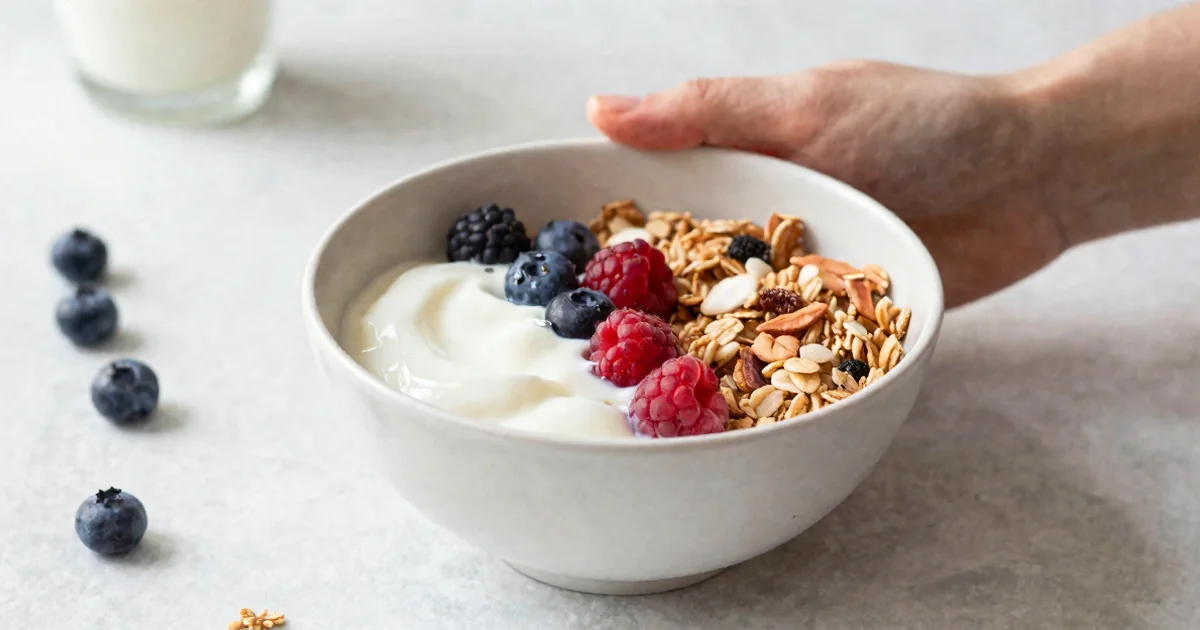
Greek yogurt provides creamy base for varied breakfasts. Basic yogurt bowl combines 1 cup yogurt with berries and nuts for balanced nutrition.
Overnight oats mixed with yogurt prepare in advance. Layer yogurt with fruit for parfaits.
Smoothie Approaches
Smoothies work when eating solid food difficult. Basic protein smoothie includes milk, protein source, and fruit. Blend with ice for desired consistency.
Add nut butter for healthy fats. Include greens for extra vegetables without affecting taste significantly.
Portion Guidance
Portions depend on individual calorie needs. Weight loss context suits 300-400 calories at breakfast for many people. Maintenance allows 350-500 calories depending on activity level.
These represent general ranges. Individual needs vary based on age, gender, activity, and metabolism.
Meal Prep Strategies
Preparing ahead saves morning time. Boil eggs on Sunday for the week. Mix overnight oats in jars for multiple portions. Bake egg muffins that reheat quickly.
Freezer options include egg muffins and breakfast burritos that microwave easily.
Budget-Friendly Choices
Nutritious breakfasts do not require expensive ingredients. Eggs provide cheapest protein. Oatmeal costs very little in bulk. Frozen fruit matches fresh nutrition at lower cost.
Store brand yogurt offers quality similar to name brands. Peanut butter costs less than almond butter with similar nutrition.
Conclusion
Weight-friendly breakfasts emphasize 20-30g protein with fiber for satiety. Eggs, Greek yogurt, and oatmeal provide affordable, accessible foundations.
Prep options in advance for grab-and-go convenience. Rotate several recipes to maintain variety. Adjust portions based on individual calorie needs and hunger signals.
Skip expensive specialty ingredients. Basic proteins and whole grains work fine. Consistency matters more than sophistication.
Explore more recipes: Browse practical cooking guides at TopicNest Food
Disclaimer: Recipe results may vary. Adjust to dietary needs and preferences.
TopicNest
Contributing writer at TopicNest covering food and related topics. Passionate about making complex subjects accessible to everyone.