Table of Contents
Best Yoga Poses for Stress and Anxiety: What the Research Shows
A 2025 meta-analysis of 27 randomized controlled trials found that yoga significantly reduced anxiety symptoms compared to control groups. The mechanism is physiological, not simply relaxation: yoga activates the parasympathetic nervous system and lowers cortisol in measurable ways. Even a single 20-minute session has been shown to reduce self-reported stress and improve mood.
A 2024 randomized controlled trial compared an 8-week yoga program to cognitive behavioral therapy (CBT) for mild-to-moderate generalized anxiety disorder. The yoga group showed equivalent reductions in anxiety symptoms. This does not mean yoga replaces CBT for clinical anxiety - but it establishes yoga as more than a wellness practice.
How Yoga Affects Stress Physiologically
The stress response is governed by the sympathetic nervous system - the fight-or-flight system. Yoga counters this through the parasympathetic nervous system, sometimes called the rest-and-digest system.
Specific postures activate this system through different mechanisms. Forward folds stimulate the vagus nerve, which runs from the brainstem through the gut and is the primary parasympathetic pathway. Inversions shift blood pressure regulation, triggering baroreceptors that slow heart rate. Slow nasal breathing - central to yoga practice - measurably increases heart rate variability, a marker of parasympathetic tone.
Cortisol, the primary stress hormone, decreases with consistent yoga practice. Multiple studies show this effect at 8 to 12 weeks of regular sessions.
10 Poses Most Consistently Linked to Stress Relief
1. Child's Pose (Balasana) Forward folding activates the vagus nerve through compression of the abdominal organs and stimulation of stretch receptors in the neck. Hold 60 to 90 seconds with slow nasal breathing.
2. Legs-Up-the-Wall (Viparita Karani) This passive inversion reduces heart rate within five minutes by triggering baroreceptors in the neck and chest. It requires no flexibility. Hold 5 to 10 minutes.
3. Standing Forward Fold (Uttanasana) Inverting the head below the heart shifts blood pressure and promotes venous return. Bend your knees generously. Hold 30 to 60 seconds.
4. Supine Bound Angle (Supta Baddha Konasana) Lie on your back with feet together and knees falling open. This supported chest opener counteracts the closed, rounded posture associated with chronic stress. Place blocks or rolled blankets under each knee. Hold 3 to 5 minutes.
5. Seated Forward Fold (Paschimottanasana) From seated with legs extended, hinge at the hips toward your feet. Use a yoga strap if hands do not reach feet. The forward fold position quiets the nervous system independently of the stretch. Hold 60 seconds.
6. Cat-Cow (Marjaryasana-Bitilasana) Slow, breath-synchronized spinal movement is one of the most accessible parasympathetic activators. The rhythm reinforces slow breathing. Perform 10 to 15 rounds as a transition between poses.
7. Reclined Spinal Twist (Supta Matsyendrasana) Lie on your back and guide one knee across your body. The gentle compression and release of the abdominal area massages the vagus nerve pathway. Hold 60 seconds each side.
8. Wide-Leg Standing Forward Fold (Prasarita Padottanasana) Step feet wide, hinge forward, rest hands or crown of head toward the floor. This pose combines inversion benefits with hip opening. Hold 30 to 60 seconds.
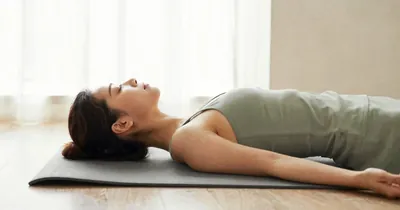
9. Corpse Pose (Savasana) Lie flat on your back, arms slightly away from the body, eyes closed. This is the most underestimated pose in yoga. Holding complete stillness for 5 to 10 minutes at the end of a session consolidates the parasympathetic shift achieved during practice.
10. Supported Fish Pose (Matsyasana Variation) Place a yoga block under the thoracic spine (between shoulder blades) and another under the head. Lie back over the block. This chest opener counters postural stress patterns and stimulates the vagus nerve through neck extension. Hold 2 to 3 minutes.
Breath Patterns That Enhance Each Pose
The breathing pattern amplifies the effect of each pose. Two patterns have the most evidence:
Extended exhale breathing: Inhale for 4 counts, exhale for 6 to 8 counts. The longer exhale activates the parasympathetic nervous system more strongly than equal-ratio breathing.
Box breathing (modified): Inhale 4, hold 4, exhale 6, hold 2. Used during held poses for 3 to 5 cycles.
A Complete 15-Minute Calming Sequence
Combine these elements: Begin with 3 minutes of extended exhale breathing seated or lying down. Cat-Cow for 2 minutes. Child's Pose for 90 seconds. Reclined Spinal Twist for 60 seconds each side. Legs-Up-the-Wall for 5 minutes. Savasana for 2 minutes.
Practice with a quality yoga mat to avoid slipping during transitions.
How Often and When to Practice
For anxiety management, research suggests three to five sessions per week produces better outcomes than one or two longer sessions. Even 15 minutes is sufficient. Evening practice appears most beneficial for stress relief and sleep onset, as it aligns with the natural cortisol decline that should occur in the hours before sleep.
This content is for educational purposes only and not medical advice. Consult healthcare professionals before starting new health or fitness programs.
TopicNest
Contributing writer at TopicNest covering health and related topics. Passionate about making complex subjects accessible to everyone.