Table of Contents
Home fitness equipment traditionally assumes dedicated space - full power racks, bench press stations, multiple cardio machines. This approach excludes people living in apartments, condos, or homes without spare rooms. The constraint proves unnecessary. Strategic equipment selection and smart storage enable complete training programs in spaces as small as 6x8 feet.
Research on training effectiveness shows no inherent advantage to large commercial gyms over well-designed compact setups. A 2020 study in the Journal of Strength and Conditioning Research found home-based resistance training produced equivalent strength gains to gym training when equipment enabled progressive overload. The key involves choosing versatile tools rather than specialized single-purpose machines.
Space Assessment and Planning
Effective small-space gyms start with honest space evaluation. Measure available floor area during use and storage. A foldable treadmill requires 50x24 inches during use but folds to 5 inches height for under-bed storage. This dual-state consideration determines practical capacity.
Vertical space matters as much as floor area. Wall-mounted folding squat racks provide full power rack functionality while folding to 11 inches wall protrusion. This enables serious strength training without permanently consuming floor space.
Consider workout timing relative to space usage. Someone training mornings might set up equipment in the living room before others wake, then store it afterward. Evening trainers might use bedroom space temporarily. These patterns influence equipment selection - faster setup favors simpler tools.
Essential Equipment for Complete Training
Comprehensive fitness programs address strength, cardiovascular conditioning, and mobility. Small-space gyms can accomplish all three through careful equipment selection.
Strength Training Foundation
Adjustable dumbbells represent the single most versatile strength tool. The Bowflex SelectTech set replaces 15 pairs of traditional dumbbells while occupying 15x8 inches per dumbbell. This space efficiency enables progressive loading from 5-52 pounds - adequate for most compound movements.
An adjustable bench extends dumbbell versatility dramatically. Incline, flat, and decline positions enable chest pressing, rowing variations, shoulder work, and core exercises. Quality benches support 1000+ pounds while folding for vertical storage against walls.
For leg development beyond dumbbell work, wall-mounted squat racks enable barbell training in minimal space. The RitFit folding rack provides squat, bench press, and pull-up capability while folding to 6 inches when not in use. This approach suits serious strength training without dedicated gym rooms.
Cardiovascular Options
Cardio equipment typically consumes significant space. Treadmills, ellipticals, and bikes dominate home gym footprints. Foldable alternatives solve this problem effectively.
Compact folding treadmills provide walking and jogging capability in 50x24 inch footprints, folding to under-bed storage. The UREVO models offer desk attachments for walking while working - dual-purpose functionality valuable in small spaces.
Folding exercise bikes deliver low-impact cardio in even smaller footprints. The Caromix 5-in-1 bike combines upright, recumbent, and desk positions while folding to 19x18 inches. Price points from $120-250 make bikes accessible for budget-conscious setups.
Compact rowing machines provide full-body cardio engaging legs, core, and upper body simultaneously. Magnetic resistance models fold vertically for closet storage, requiring only 3 feet of floor space during use.
Mobility and Flexibility
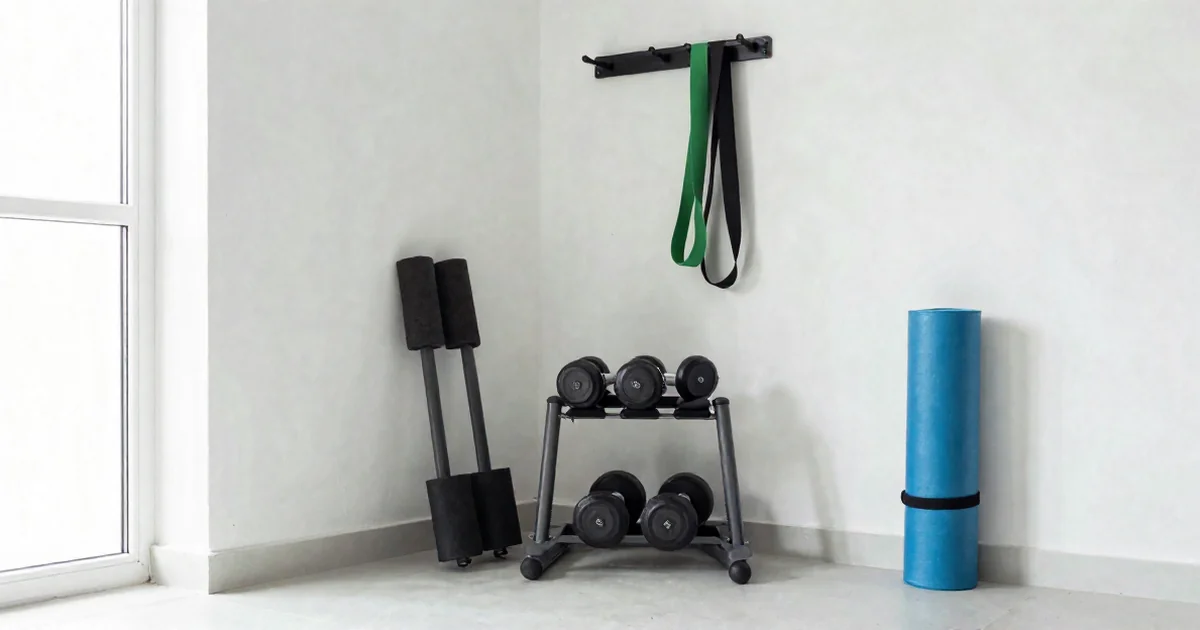
Resistance bands enable strength training, stretching, and mobility work while storing in a drawer. Five-band sets covering light to heavy resistance cost under $20 and weigh less than a pound. This makes them ideal for small-space supplemental work.
Yoga mats provide floor exercise surfaces for bodyweight training, core work, and stretching. Rolling and standing in corners preserves floor space when not in use.
Budget Tier Recommendations
Budget Tier: $500
A functional complete gym fits $500 budgets through strategic priorities:
- Adjustable dumbbells: $250-300
- Adjustable bench: $80-150
- Resistance bands set: $10-20
- Yoga mat: $40-60
- Storage rack: $30-60
Total: ~$410-590
This combination enables comprehensive resistance training, bodyweight exercises, and stretching. Cardio comes from outdoor running or bodyweight circuits initially. The setup fits in a closet when stored.
Mid-Range Tier: $1,500
Additional budget enables cardio equipment and more versatility:
- Previous tier foundation: $410-590
- Folding treadmill: $200-350
- Folding exercise bike: $180-280
- Folding rowing machine: $200-350
- Pull-up bar: $30-50
Total: ~$1,020-1,620
This tier provides strength, multiple cardio options, and pull-up capability. Equipment stores in closets or under beds, enabling setup in living rooms or bedrooms temporarily.
Premium Tier: $3,000+
Higher budgets enable barbell training and premium equipment:
- Previous tier foundation: $1,020-1,620
- Wall-mounted folding squat rack: $400-700
- Olympic barbell and plates: $300-500
- Upgraded treadmill with incline: $500-800
- Wall storage system: $40-80
Total: ~$2,260-3,700
This setup rivals commercial gyms for training capability while folding away when not needed. Wall-mounted racks preserve floor space permanently.
Smart Storage Solutions
Storage determines whether small-space gyms remain functional or create clutter. Dedicated storage systems prevent equipment from becoming obstacles.
Vertical storage racks with hooks accommodate dumbbells, kettlebells, resistance bands, and jump ropes in 2 square feet of wall space. This consolidates small items that otherwise scatter across floors.
Folding equipment requires clear storage paths. Designating specific closet areas or under-bed zones for each item prevents setup friction. The easier storage process, the more likely equipment gets used consistently rather than abandoned.
Vertical bike stands and wall-mounted rack systems keep equipment visible while minimizing footprint. Out-of-sight storage works until retrieval effort exceeds motivation - keeping tools accessible increases usage adherence.
Equipment Selection by Fitness Level
Beginners
New trainees benefit from simpler setups focusing on movement mastery:
- Resistance bands
- Adjustable bench
- Light dumbbells (5-25 lbs)
- Yoga mat
This minimal investment enables learning fundamental patterns before advancing to heavier loads. Many beginners discover bodyweight training and bands provide months of progression.
Intermediate
Established training experience justifies more investment:
This level enables progressive overload across major movement patterns while maintaining space efficiency.
Advanced
Serious athletes pursuing specific performance goals need maximum versatility:
- Wall-mounted power rack
- Adjustable dumbbells
- Olympic barbell and plates
- Premium cardio equipment
- Rowing machine
This investment approaches commercial gym capability while folding into residential spaces.
Multifunctional Equipment Priorities
Small spaces demand equipment versatility. Single-purpose machines waste valuable space.
Adjustable dumbbells replace entire dumbbell racks. Bowflex SelectTech systems provide 5-52 pounds in 2.5-pound increments - equivalent to 17 dumbbell pairs in one footprint.
Folding benches serve pressing, rowing, core work, and step-ups. Eight-position benches enable incline variations targeting different muscle groups from a single tool.
Wall-mounted racks combining squat capability, pull-up bars, and cable attachments replace three separate pieces. This consolidation proves essential in limited square footage.
Setup and Breakdown Efficiency
Small-space gyms require frequent setup and storage. Minimizing this friction determines long-term adherence.
Simplest setups involve minimal assembly. Resistance bands and adjustable dumbbells require only placement - no assembly needed. This enables 30-second workout initiation.
Folding equipment like benches and exercise bikes typically unfold in under 60 seconds with practice. This remains manageable for daily training.
Wall-mounted systems require one-time installation but fold/unfold quickly thereafter. GarveeLife racks fold in approximately 2 minutes once installed - acceptable for serious training sessions.
Common Mistakes to Avoid
Over-buying equipment for available space creates unusable clutter. Start with essentials, add pieces as needs become clear through consistent training. Many home gyms accumulate unused machines that seemed appealing initially.
Prioritizing cheap equipment over quality proves false economy. A $50 bench that wobbles creates injury risk and gets abandoned. A $120 stable bench serves reliably for years. Small-space gyms need fewer pieces - buying quality matters more than budget systems.
Neglecting storage planning leaves equipment scattered across living spaces. Designate storage locations before purchasing items. If storage solution doesn't exist, reconsider the purchase.
Ignoring noise considerations creates conflicts in apartments or shared homes. Magnetic resistance bikes run nearly silent. Slamming weights on hard floors annoys neighbors. Considering usage context prevents problems.
Maintenance and Longevity
Quality equipment maintained properly serves decades. Adjustable dumbbells have no moving parts requiring maintenance beyond occasional cleaning. Bowflex SelectTech systems use simple dial mechanisms lasting years with basic care.
Cardio equipment needs more attention. Treadmill belts require periodic lubrication. Exercise bike and rowing machine resistance systems need occasional adjustment. Following manufacturer guidance prevents premature wear.
Cleaning equipment after sweaty sessions prevents corrosion and material degradation. Wiping down benches and handles takes 30 seconds but significantly extends lifespan.
Making Space Work Long-Term
Small-space home gyms succeed through consistency rather than equipment quantity. A minimal setup used daily produces better results than elaborate systems collecting dust.
Starting with core tools - dumbbells, bench, resistance bands - enables months of progression. Adding equipment as specific needs emerge prevents waste.
Building storage systems early prevents clutter accumulation. Wall racks and equipment holders keep tools organized and accessible.
Most importantly, designing around available space rather than ideal scenarios creates sustainable practices. A 6x8 foot area with smart equipment selection enables complete training. Waiting for a larger space often means waiting indefinitely.
This content is for educational purposes only and not medical advice. Consult healthcare professionals before starting new health or fitness programs.
TopicNest
Contributing writer at TopicNest covering health and related topics. Passionate about making complex subjects accessible to everyone.