Table of Contents
Why Space Matters for Consistency
Research on habit formation shows that environmental design significantly impacts exercise adherence. A 2022 study in the Journal of Sport and Health Science found that having a dedicated exercise space increased workout frequency by 34% compared to using multi-purpose areas. For yoga practice, the space requirement is smaller than most people assume.
The minimum functional space for yoga is approximately 180 cm by 60 cm - the footprint of a standard yoga mat. This fits in most bedrooms, living room corners, or even walk-in closets. Studies on home exercise environments suggest that consistency matters more than square footage. A small, dedicated corner used daily beats a large unused room.
Essential Physical Elements
The foundation of any home yoga space starts with the mat itself. Research on biomechanics indicates that mat thickness affects joint comfort and balance. Standard 3-5 mm mats work for most practitioners, while those with joint sensitivity may prefer 6-8 mm options. Non-slip surfaces reduce injury risk during standing poses and transitions.
Wall space enhances practice versatility. Having at least one clear wall within arm's reach enables supported inversions, leg stretches, and balance work. Physical therapists often recommend wall-supported poses for building strength safely, particularly for beginners or those recovering from injury.
Temperature control influences practice quality. Exercise physiology research shows optimal muscle flexibility occurs at room temperatures between 20-22°C for gentle practice, or 24-26°C for more vigorous styles. This is notably cooler than heated studio classes, which can increase dehydration risk.
Creating the Right Atmosphere
Lighting significantly affects both safety and mood during practice. Natural light supports circadian rhythm alignment when practicing morning routines. A 2021 study in Indoor Air found that exposure to natural light during exercise improved sleep quality by 18% compared to artificial lighting only.
For evening practice or windowless spaces, warm-toned bulbs (2700-3000K) create a calming environment without the alertness-promoting effects of blue-spectrum light. Dimmer switches allow adjustment based on practice intensity - brighter for dynamic flows requiring visual precision, softer for restorative sessions.
Sound environment matters for concentration. Acoustics research suggests that ambient noise below 40 decibels supports focus during mindfulness practices. Options include playing gentle background music, using white noise to mask household sounds, or practicing in silence. Practitioners report that consistency in sound environment helps establish routine.
Storage Solutions That Support Practice
Accessibility directly correlates with practice frequency. When yoga equipment requires extensive setup, adherence drops. Effective storage keeps items visible and within reach.
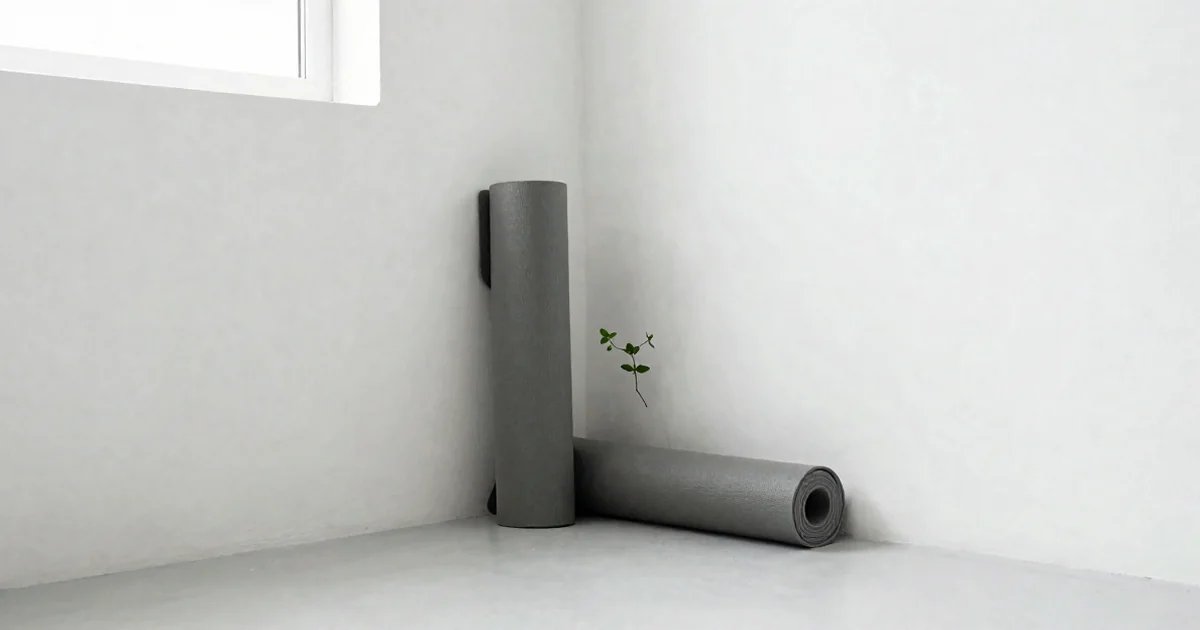
Wall-mounted racks hold mats vertically, using minimal floor space while keeping them aired out and ready. Small baskets or bins can house blocks, straps, and bolsters within arm's reach. The principle is simple - if setup takes more than 30 seconds, practice sessions become less frequent.
For multi-purpose rooms, rolling carts provide mobile storage that tucks away when not in use. This preserves the dedicated practice zone concept while accommodating space constraints. Studies on exercise adherence show that reducing barriers to starting - even small ones like equipment setup - increases consistency significantly.
Making the Space Inviting
Psychological research on exercise motivation reveals that environment aesthetics affect practice frequency. A space that feels pleasant to enter gets used more consistently than a purely functional area.
Simple visual elements can enhance appeal without requiring major investment. A small plant introduces natural elements. A dedicated shelf for a candle or small object that holds meaning creates ritual around practice. These touches signal to the brain that this space has purpose.
Cleanliness matters more than decoration. Neuroscience research shows that cluttered environments increase cognitive load and stress hormones. Keeping the practice area tidy - just the mat and essential props - supports the mental clarity that yoga aims to develop.
Minimal aromatherapy, such as a single essential oil diffuser, may enhance the sensory experience. While research on aromatherapy's direct benefits remains mixed, the association of specific scents with practice can serve as a psychological cue that it's time to begin.
Adapting to Available Space
Small-space practitioners can use vertical solutions. Wall-mounted fold-down shelves store props when not needed. Mirrors, while not essential, help with alignment checking in spaces too small for certain viewing angles.
Shared spaces require different strategies. Using a specific corner consistently, even in a multi-purpose room, creates spatial association. Rolling up the mat and storing it nearby rather than in a closet reduces friction. Some practitioners use a specific rug or floor marker to define their yoga zone within a larger room.
Research on habit formation emphasizes that consistency of location strengthens routine more than perfection of setup. Practicing in the same corner daily builds stronger habits than waiting for ideal conditions.
What You Don't Need
Expensive equipment rarely correlates with practice quality. Basic props - one or two blocks, a strap - serve most home practitioners adequately. Elaborate systems or specialized furniture often go unused.
Mirrors aren't necessary for most practitioners. While they help beginners learn alignment, over-reliance on visual feedback can reduce proprioceptive awareness - the internal sense of body position that yoga develops.
Special flooring isn't required. Standard carpet, hardwood, or tile all work with appropriate mat selection. The yoga industry markets numerous "essential" items, but research on exercise adherence shows that starting simple and adding gradually prevents both overwhelm and wasted investment.
Building the Practice Habit
Environmental psychology research suggests that reducing decision fatigue supports consistency. Having a prepared space eliminates the daily question of where to practice. Keeping the mat unrolled, if space allows, removes even that small barrier.
Time-of-day consistency matters more than duration. Practicing 10 minutes daily in the same spot builds stronger habits than sporadic longer sessions. The space itself becomes a cue that triggers the routine.
Starting small prevents burnout. A corner with just a mat and one block is enough. Additional elements can be added as practice deepens and preferences emerge. This approach aligns with behavior change research showing that minimal viable setups increase long-term adherence.
Disclaimer: This content is for educational purposes only and not medical advice. Consult healthcare professionals before starting new health or fitness programs. Individual needs vary - work with qualified instructors for personalized guidance.
TopicNest
Contributing writer at TopicNest covering health and related topics. Passionate about making complex subjects accessible to everyone.