Table of Contents
Muscle tightness after training creates movement restrictions that compound over time. Static stretching addresses surface-level tension, but deeper fascial restrictions often require external assistance to release effectively. Assisted stretching - whether from a partner, professional, or specialized equipment - enables greater range of motion than self-directed methods.
Research distinguishes between temporary flexibility gains and lasting structural changes. A 2021 study in the Journal of Athletic Training found assisted stretching produced 23% greater hamstring flexibility improvements compared to unassisted static holds. Understanding why this difference exists helps structure effective recovery protocols.
The Mechanics of Assisted Stretching
Muscles respond to stretch through neurological and mechanical pathways. When external force gradually lengthens muscle tissue beyond comfortable range, mechanoreceptors signal the nervous system to reduce protective tension. This process - reciprocal inhibition - allows deeper stretching than muscles permit independently.
Professional assisted stretching services guide clients through passive stretches while manipulating limbs to target specific muscle groups. A trained practitioner identifies compensation patterns and applies appropriate force without triggering protective muscle spasms. This targeted approach addresses restrictions that general yoga or foam rolling miss.
Stretching straps replicate some benefits of partner-assisted stretching through mechanical advantage. Multi-loop designs enable progressive deepening as flexibility improves, providing measured assistance without requiring a second person.
Fascial Release vs. Muscle Stretching
Fascia - the connective tissue surrounding muscles - responds differently than muscle fibers themselves. Fascial restrictions create adhesions limiting movement quality even when muscle length appears adequate. Sustained pressure or slow stretching releases fascial tension through a process called thixotropy, where tissue transitions from gel-like to more fluid states.
Research in the Journal of Bodywork and Movement Therapies (2020) compared fascial techniques to traditional stretching. Participants receiving fascial-focused treatments showed improved movement quality scores alongside flexibility gains. Traditional stretching improved flexibility without equally addressing movement quality.
Massage balls enable targeted fascial release through sustained pressure on trigger points. Unlike foam rollers covering broad areas, lacrosse balls isolate specific restrictions in muscles like piriformis, rhomboids, or plantar fascia.
Benefits for Athletic Recovery
Athletes accumulate microtrauma from repetitive movements - runners develop tight hip flexors, swimmers create shoulder restrictions, cyclists face hamstring shortening. Assisted stretching addresses these sport-specific patterns more effectively than generic flexibility routines.
A 2019 study in Sports Medicine examined recovery protocols across different training intensities. Athletes incorporating assisted stretching 2-3 times weekly showed 19% faster return to baseline range of motion after hard training compared to those using only active recovery. The relationship between flexibility and injury prevention proved less direct than commonly assumed, but movement quality improvements clearly reduced compensation patterns leading to overuse injuries.
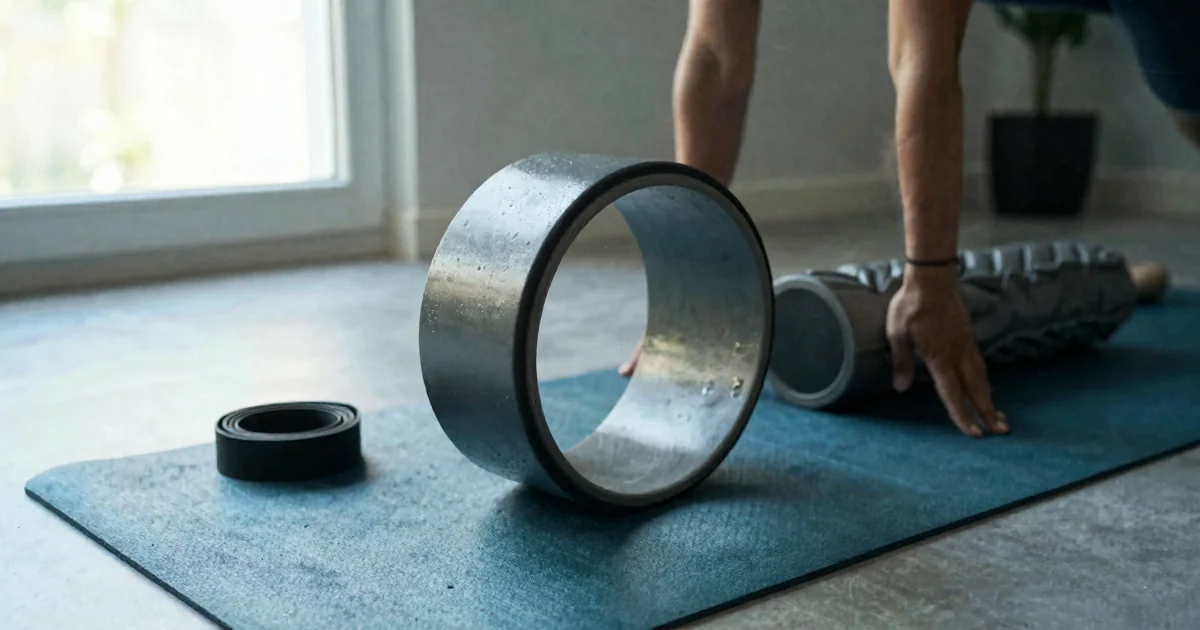
Yoga wheels assist thoracic spine extension - a common restriction in desk workers and athletes emphasizing forward movements. The curved surface supports bodyweight while gravity provides gentle assistance, enabling passive stretching impossible through active movement alone.
Comparing Professional Services to Self-Directed Methods
Professional stretching services - popularized by franchises like StretchLab and similar studios - offer trained practitioners who identify individual limitations and apply appropriate force. Sessions typically last 25-50 minutes and cost $50-100. The main advantage comes from expertise in recognizing compensation patterns and knowing when to increase or decrease stretch intensity.
Self-directed assisted stretching using equipment provides convenience and cost savings but requires learning proper technique. Someone incorrectly using a stretching strap might force range of motion before tissues adapt, creating injury risk rather than recovery benefits.
Research in Physical Therapy in Sport (2022) found similar outcomes between professional assisted stretching and properly instructed self-practice after 8 weeks. The key difference appeared in the first 2-3 weeks when technique instruction prevented common errors. This suggests an initial professional assessment followed by independent practice offers optimal cost-effectiveness for most people.
At-Home Assisted Stretching Techniques
Effective home stretching requires understanding progressive loading. Starting with gentle assistance and gradually increasing force over 30-60 seconds allows nervous system adaptation. Forcing deep stretches immediately triggers protective reflexes that limit actual gains.
For hamstrings, lying supine with a stretching strap around the foot enables controlled assistance. Pull the leg toward vertical while keeping the knee straight, increasing tension gradually. Hold 60-90 seconds, breathing normally. The strap provides mechanical advantage impossible with arm strength alone.
Hip flexor stretching benefits from door frame assistance. Kneeling in a lunge position, use a door anchor system to pull the rear leg into greater extension. This creates hip flexor lengthening beyond what bodyweight lunge stretches achieve.
Yoga wheels assist spinal extension by supporting the back while gravity deepens the stretch. Position the wheel at mid-back, arms overhead, and slowly extend backward. The curved surface matches spinal contours better than flat foam rollers.
Percussion Massage for Recovery
Percussion therapy - delivered through massage guns - combines mechanical advantage with rapid muscle manipulation. Devices deliver 30-50 percussions per second, creating muscle relaxation through rapid reciprocal inhibition. This differs from sustained stretching but complements it effectively.
Research in the Journal of Clinical and Diagnostic Research (2021) examined percussion therapy effects on delayed onset muscle soreness (DOMS). Subjects using massage guns for 15 minutes post-workout reported 30% less soreness 24-48 hours later compared to passive recovery. Range of motion returned to baseline 12 hours faster on average.
Modern percussion devices offer variable speeds and interchangeable heads for different muscle groups. Lower speeds (1200-1800 RPM) suit recovery and general muscle relaxation. Higher speeds (2400-3200 RPM) address deeper tissue adhesions but require careful application to avoid bruising.
Duration and Frequency Recommendations
Stretching research consistently shows longer hold times produce better results than multiple short stretches. A 2018 meta-analysis in the British Journal of Sports Medicine found 60-second holds superior to 15-30 second stretches for lasting flexibility gains. Total weekly stretching time mattered more than daily frequency.
For recovery purposes, 2-3 assisted stretching sessions weekly targeting major muscle groups provides measurable benefits without excessive time investment. Each muscle group benefits from 2-3 minutes total weekly stretching - achievable through three 60-second holds or two 90-second sessions.
Professional sessions typically last 45-60 minutes covering full-body mobility. Self-directed sessions might focus 15-20 minutes on specific restrictions rather than comprehensive routines. Athletes should prioritize sport-specific areas - runners emphasizing hip flexors and hamstrings, climbers focusing on shoulders and forearms.
Common Mistakes and How to Avoid Them
Bouncing during stretches - ballistic stretching - creates micro-tears and triggers protective muscle contraction. Assisted stretching requires smooth, sustained force increases. The stretching straps with multiple loops help prevent this by providing discrete progressive positions rather than continuous pulling.
Stretching cold muscles increases injury risk. Light movement - 5-10 minutes of walking or easy cardio - increases tissue temperature and improves stretch effectiveness. Post-workout stretching capitalizes on already-warmed muscles for optimal results.
Ignoring pain signals represents another common error. Stretching should create tension but not sharp pain. Pain indicates excessive force or problematic movement patterns requiring professional assessment. Distinguishing productive discomfort from harmful pain determines whether assisted stretching aids or hinders recovery.
Integration With Other Recovery Methods
Assisted stretching complements but doesn't replace other recovery modalities. Sleep, nutrition, and training periodization impact recovery more significantly than any single technique. Stretching addresses specific mobility restrictions but can't compensate for inadequate rest or poor programming.
Combining methods often produces superior results. Using massage balls for trigger point release before stretching reduces tissue resistance, enabling deeper stretches. Following percussion massage with static holds capitalizes on reduced muscle tone.
Complete recovery sets including foam rollers, stretching straps, and massage balls provide tools for comprehensive home protocols. The convenience of having multiple tools available increases adherence - the primary factor determining long-term results.
When to Seek Professional Assessment
Persistent restrictions despite consistent stretching warrant professional evaluation. Physical therapists identify underlying causes - strength imbalances, movement dysfunction, or structural issues - that stretching alone won't resolve. A tight muscle often reflects compensation for weakness elsewhere rather than simply needing lengthening.
Asymmetrical flexibility indicates potential problems. Everyone shows some side-to-side difference, but marked imbalances suggest movement pattern issues or injury compensation. Professional assisted stretching services can identify these patterns, though physical therapy provides more comprehensive assessment.
Post-injury stretching requires specific protocols. Scar tissue formation following muscle tears needs controlled loading to remodel properly. Too-aggressive stretching disrupts healing, while insufficient movement creates permanent restrictions. Professional guidance proves valuable during rehabilitation phases.
Building a Sustainable Practice
Consistency determines stretching outcomes more than intensity or specific technique. Brief daily sessions produce better long-term results than occasional intensive stretching. Even 10 minutes targeting key restrictions maintains mobility when practiced regularly.
Tracking progress helps maintain motivation. Measuring hamstring flexibility through sit-and-reach distance or shoulder mobility through specific movement tests provides objective feedback. Progress often occurs slowly - 1-2cm improvement monthly represents good progress, not immediate dramatic changes.
Equipment investment should match usage commitment. Someone uncertain about maintaining a stretching practice benefits from minimal initial investment - a basic stretching strap and massage ball set costs under $30. Those committed to regular practice might invest in percussion devices or comprehensive sets offering more versatility.
Research on Long-Term Flexibility Development
Flexibility improvements follow predictable timelines. Initial gains appear quickly - 10-15% improvement within 2-3 weeks reflects neurological adaptation as the nervous system permits greater range. Subsequent progress slows as structural tissue changes require months of consistent practice.
A 2020 longitudinal study in the Scandinavian Journal of Medicine & Science in Sports tracked flexibility development over 12 months. Subjects practicing assisted stretching 3x weekly achieved 35% average flexibility improvement by month 6, with diminishing returns afterward. Maintenance became the primary goal rather than continued aggressive improvement.
Age affects rate but not ultimate potential. Older individuals showed slower initial progress but achieved similar final outcomes given adequate practice duration. This suggests patience and consistency matter more than starting flexibility level or age.
The Recovery Context
Assisted stretching represents one tool in comprehensive recovery strategy. It addresses specific mobility restrictions effectively but works best alongside adequate sleep, proper nutrition, intelligent training design, and stress management. Recovery proves multifactorial - no single intervention creates optimal results independently.
For most people, combining 2-3 weekly assisted stretching sessions with other recovery methods provides measurable benefits without requiring excessive time investment. The key involves matching methods to individual restrictions rather than following generic protocols.
Sustainability trumps optimization. A moderate stretching practice maintained consistently for years produces better outcomes than aggressive short-term programs leading to burnout or injury. Finding enjoyable methods and realistic time commitments determines long-term success more than choosing theoretically optimal techniques.
This content is for educational purposes only and not medical advice. Consult healthcare professionals before starting new health or fitness programs.
TopicNest
Contributing writer at TopicNest covering health and related topics. Passionate about making complex subjects accessible to everyone.