Table of Contents
Red light therapy has moved from niche biohacking circles into mainstream wellness, with devices now sold at major retailers and beauty brands like L'Oreal entering the market. The claims range from skin rejuvenation to pain relief to improved athletic recovery. But separating evidence from marketing requires a closer look at the research.
How Red Light Therapy Works
Red light therapy (also called photobiomodulation) uses specific wavelengths of light - typically 630-670nm (visible red) and 810-850nm (near-infrared) - to penetrate the skin and interact with cells at the mitochondrial level.
The proposed mechanism involves cytochrome c oxidase, an enzyme in the mitochondrial electron transport chain. When these wavelengths hit this enzyme, they may increase ATP (cellular energy) production, reduce oxidative stress, and trigger signaling pathways that promote tissue repair.
This is not the same as UV tanning beds or infrared saunas. Red light therapy uses non-thermal, non-UV wavelengths that do not damage skin or produce heat in significant amounts.
What the Evidence Actually Supports
Skin Health and Anti-Aging
This is where evidence is strongest. A 2014 study in Photomedicine and Laser Surgery found that participants using red light therapy twice weekly for 30 sessions showed significant improvement in skin complexion, collagen density, and wrinkle reduction compared to controls.
A 2019 systematic review in the Journal of Clinical and Aesthetic Dermatology confirmed benefits for wound healing, acne reduction, and collagen stimulation across multiple trials. The effects are modest but measurable - expect subtle improvement over 8-12 weeks, not overnight transformation.
Pain and Inflammation
Research on musculoskeletal pain shows promise. A 2022 meta-analysis found that photobiomodulation reduced pain and improved function in osteoarthritis patients. The World Association for Photobiomodulation Therapy now recognizes it as an adjunct treatment for certain pain conditions.
For joint pain, tendonitis, and muscle soreness, multiple studies show 15-30% pain reduction with regular use. This is meaningful but unlikely to replace other treatments entirely.
Athletic Recovery
The evidence here is mixed but leaning positive. A 2018 systematic review found that pre-exercise red light therapy may enhance performance and reduce muscle damage markers. Post-exercise application showed reduced DOMS (delayed-onset muscle soreness) in several trials.
However, effect sizes vary widely between studies, and optimal protocols (timing, dose, duration) are not yet standardized.
Hair Growth
Moderate evidence supports red light therapy for androgenetic alopecia (pattern baldness). Several FDA-cleared devices exist for this purpose. A 2019 meta-analysis found statistically significant hair density increases, though results are gradual and require consistent use over 4-6 months.
What the Evidence Does Not Support
Some popular claims lack adequate evidence:
- Weight loss - no reliable evidence that red light therapy directly causes fat loss
- Cognitive enhancement - early research exists but no clinical evidence for healthy adults
- Hormone optimization - social media claims about testosterone increase from testicular exposure lack credible evidence
- Cancer treatment - no evidence as a standalone treatment (though it may help with chemotherapy side effects under medical supervision)
Choosing a Home Device
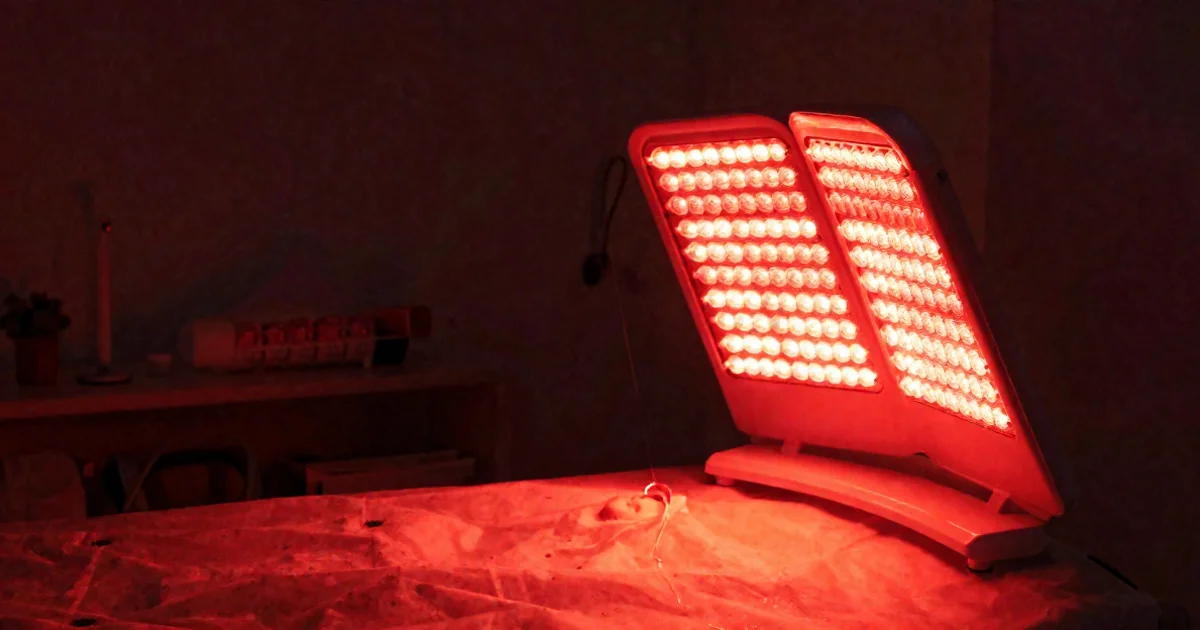
Home devices fall into three categories: panels, masks, and handheld wands. For general use, panels offer the best value because they cover more area.
Key specifications to check:
- Wavelength: Look for dual-wavelength devices with both 660nm (red) and 850nm (near-infrared)
- Irradiance: Measured in mW/cm² - higher means more power delivered. Aim for 50-100 mW/cm² at treatment distance
- Treatment area: Larger panels cover more body area per session, reducing total treatment time
Recommended Devices Under $200
BestQool BQ60 (around $127) offers dual-chip 660nm/850nm wavelengths with adequate irradiance for home use. Good entry point for those who want to try red light therapy without a major investment.
Hooga HG300 (around $143-159) has a 4.4/5 rating, covers a moderate treatment area, and includes both wavelengths. Easy to mount on a door or wall.
LEDINO Panel (around $50) is an ultra-budget option for targeted treatment of small areas. Adequate for facial use but too small for body-wide treatment.
How to Use Red Light Therapy
For most applications, research suggests:
- Distance: 15-30 cm from the device (check manufacturer recommendations)
- Duration: 10-20 minutes per treatment area
- Frequency: 3-5 sessions per week
- Consistency: Allow 8-12 weeks to evaluate results
- Eye protection: Close your eyes or use provided goggles, especially with near-infrared wavelengths
Red light therapy is generally considered safe with no significant side effects reported in clinical literature. However, those taking photosensitizing medications should consult a doctor first.
The Bottom Line
Red light therapy has legitimate evidence behind it for skin health, pain management, and exercise recovery. It is not a miracle device, but it is also not purely placebo. The effects are modest and require consistent use over weeks to months.
For those interested in trying it, a mid-range panel ($100-160) provides adequate treatment at a reasonable price point. Set realistic expectations - subtle improvement over 2-3 months is what the research supports.
This content is for educational purposes only and not medical advice. Consult healthcare professionals before starting new health programs.
Explore more evidence-based health strategies at TopicNest Health.
TopicNest
Contributing writer at TopicNest covering health and related topics. Passionate about making complex subjects accessible to everyone.