Table of Contents
Sleepmaxxing: Is Sleep Optimization the New Fitness?
Sleepmaxxing describes the practice of optimizing every variable of sleep - environment, supplements, light exposure, mouth taping, cooling devices, and more. Driven by TikTok and biohacking culture, it crossed into mainstream wellness by 2026, with millions of people tracking sleep scores, experimenting with sleep stacks, and buying dedicated sleep hardware.
Some of what sleepmaxxing promotes is genuinely evidence-backed. Some of it is ineffective. And a small but important subset can actually worsen sleep for the people most motivated to try it.
Sleep as Performance: Useful Framing and Its Limits
The framing of sleep as a performance metric - something to be optimized the way athletes optimize training - has produced useful awareness. Sleep deprivation research is clear: chronic short sleep (under 7 hours) is associated with significantly elevated risks of cardiovascular disease, metabolic dysfunction, impaired immune function, and cognitive decline.
But treating every night as a performance challenge introduces a problem. Sleep requires letting go of conscious control. Turning bedtime into a high-stakes optimization exercise can increase the anxiety and arousal that prevent sleep onset. Anita Shelgikar, American Academy of Sleep Medicine president-elect, has noted that "sleepmaxxing can backfire if it turns what should be restorative into a high-pressure chore."
Practices That Have Evidence
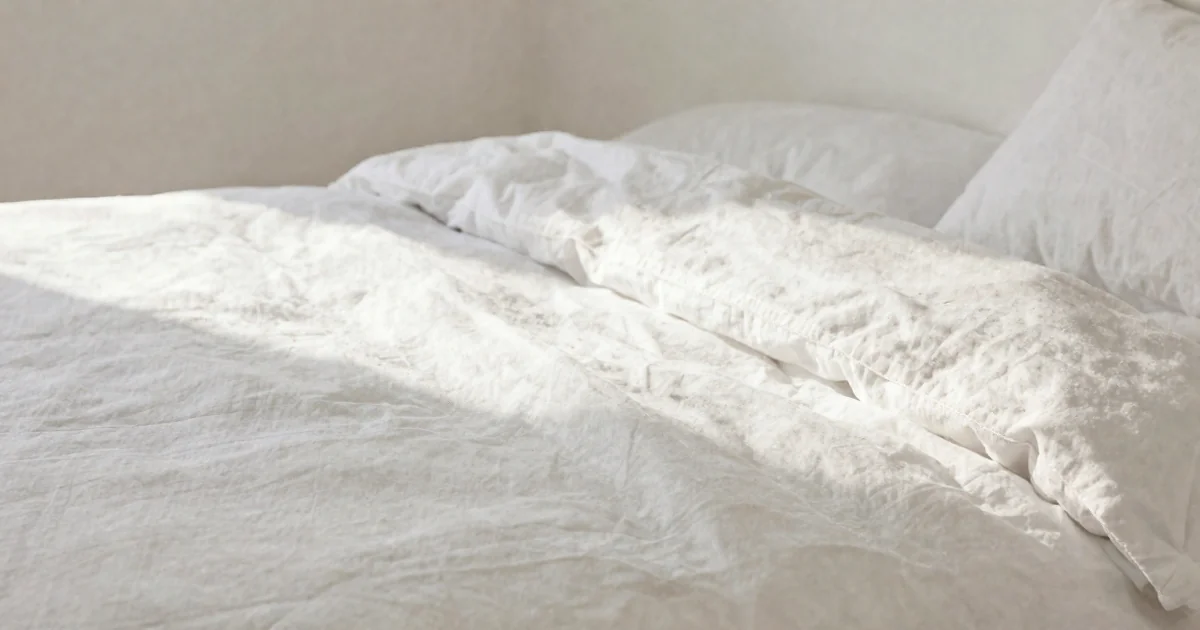
Cool, dark, quiet room. Room temperature of 15 to 19 degrees Celsius is optimal for sleep onset. Core body temperature must drop to initiate sleep, and a cool room facilitates this. Blackout curtains eliminate light pollution that suppresses melatonin.
Consistent sleep and wake times. Sleep regularity appears to matter as much as duration. A 2025 systematic review linked irregular sleep timing to significantly higher all-cause mortality, independent of total sleep duration.
Limiting blue light in the evening. Blue light at 460 to 480 nm suppresses melatonin by up to 50%. Dimming screens or using blue-light-filtering settings after 8 pm has consistent support in the literature.
No alcohol within 3 hours of sleep. Alcohol may aid initial sleep onset but suppresses REM sleep, reducing sleep quality even when it increases total duration.
Caffeine cutoff. Caffeine's half-life is 5 to 6 hours. A cup of coffee at 3 pm still has meaningful stimulant effects at 9 pm. Research suggests cutting off by early-to-mid afternoon for optimal sleep onset.
The Grey Zone: Supplements and Foods
Magnesium glycinate: A 2021 Nutrients review found associations between magnesium supplementation and improved sleep quality. This is one of the more evidence-supported sleep supplements. Doctor's Best Magnesium Glycinate at 200 to 400 mg before bed is a reasonable approach for people who may be deficient.
Kiwi before bed: One study found that eating two kiwis one hour before bed reduced sleep onset latency by 35%, possibly due to serotonin precursors in the fruit. This is a single study and should not be overstated, but it is also extremely low-risk to try.
Low-dose melatonin: Most research uses 0.3 to 1 mg, not the 5 to 10 mg doses commonly sold. Higher doses may desensitize melatonin receptors with regular use. Melatonin is most effective for circadian rhythm adjustment (jet lag, shift work) rather than as a primary sleep aid for insomnia.
Risky Extremes: Mouth Taping and Tracker Obsession
Mouth taping has gone viral as a method to force nasal breathing during sleep. Nasal breathing has genuine benefits - it filters air, humidifies it, and regulates airflow. However, mouth taping has limited clinical evidence and carries risks for anyone with nasal congestion, deviated septum, sleep apnea, or breathing difficulties. People with undiagnosed obstructive sleep apnea who mouth tape may dangerously reduce airflow.
Tracker obsession and orthosomnia. The phenomenon of orthosomnia - excessive anxiety about achieving ideal sleep scores - is documented and growing. People who spend significant mental energy monitoring, analyzing, and worrying about sleep metrics often sleep worse than before they started tracking. A sunrise alarm clock that improves morning wake conditions addresses the practical benefits without the obsession risk.
Building a Personal Sleep Setup: Two or Three Changes, Not Twenty
The research on behavior change is clear: stacking too many new behaviors simultaneously leads to failure across all of them. For sleep optimization that actually sticks, choose two or three changes and maintain them for four weeks before adding more.
Highest-impact starting points for most people: consistent wake time (even on weekends), room temperature below 19 degrees Celsius, and eliminating screens one hour before bed. These three changes, done consistently, produce more benefit than an elaborate supplement stack performed inconsistently.
This content is for educational purposes only and not medical advice. Consult healthcare professionals before starting new health or fitness programs.
TopicNest
Contributing writer at TopicNest covering health and related topics. Passionate about making complex subjects accessible to everyone.