Table of Contents
GLP-1 receptor agonists have become the most discussed development in weight management. In a 2025 survey, 52% of health experts named GLP-1 medications the top health trend heading into 2026. With the FDA approving oral Ozempic (semaglutide) in pill form in February 2026, access is expanding rapidly. But there is a problem hiding inside the success stories - and it involves your muscles.
Research consistently shows that 10-40% of total weight lost on GLP-1 medications is non-fat mass, primarily skeletal muscle. That is a serious concern. Losing muscle does not just affect how you look - it lowers your resting metabolic rate, weakens your bones, and increases your risk of injury as you age. The good news is that targeted exercise and nutrition strategies can dramatically reduce this muscle loss.
Why GLP-1 Medications Accelerate Muscle Loss
GLP-1 drugs work by reducing appetite and slowing gastric emptying. The result is a significant caloric deficit - often steeper than what most people would achieve through diet alone. When your body faces a large energy shortfall, it does not exclusively burn fat. It also breaks down muscle protein for fuel.
Studies on semaglutide and tirzepatide show that without intervention, patients lose substantial lean mass alongside fat. A 2024 analysis in The Lancet found that participants on semaglutide lost roughly 25-30% of their total weight as lean tissue over 68 weeks. For someone losing 15 kg, that could mean 4-5 kg of muscle - enough to noticeably reduce strength and daily function.
The caloric deficit is compounded by reduced protein intake. When your appetite drops significantly, you naturally eat less of everything - including protein-rich foods that are essential for muscle maintenance.
Resistance Training Is Non-Negotiable
If you are taking a GLP-1 medication and not doing resistance training, you are leaving your muscles unprotected. Aerobic exercise like walking or cycling is valuable for cardiovascular health, but it does very little to signal your body to preserve muscle tissue during a caloric deficit.
Resistance training - using weights, machines, or bodyweight exercises - sends a direct signal to your muscles that they are needed. This is the single most effective strategy to counteract GLP-1-related muscle loss.
A practical weekly framework:
- 3-4 sessions per week, each 30-45 minutes
- Focus on compound movements: squats, deadlifts, rows, presses, lunges
- Train each major muscle group at least twice per week
- Use a weight that is challenging for 8-12 repetitions
- Rest 60-90 seconds between sets
If you are new to resistance training, Fit Simplify Resistance Bands (5-pack, around $10-15 on Amazon) are an affordable starting point. They allow you to perform dozens of exercises at home without a gym membership.
Progressive Overload: The Key Principle
Simply showing up and lifting the same weight every session is not enough. Your body adapts. To continue preserving - and even building - muscle, you need progressive overload. This means gradually increasing the demand on your muscles over time.
Progressive overload can look like:
- Adding 1-2 kg to an exercise every 1-2 weeks
- Performing one additional repetition per set
- Adding an extra set to an exercise
- Slowing the tempo (e.g., 3-second lowering phase)
The key is consistency and small, measurable improvements. Keep a training log - even a simple notebook works - so you can track your lifts and ensure you are progressing.
Protein: Your Most Important Nutrient
When appetite is suppressed by GLP-1 medication, every gram of food matters more. Protein becomes your highest priority macronutrient.
Current research recommends 1.6-2.2 g of protein per kg of body weight per day for individuals in a caloric deficit who want to preserve muscle. For a person weighing 80 kg, that means 128-176 g of protein daily.
This is often difficult to achieve when your appetite is significantly reduced. Practical strategies include:
- Eat protein first at every meal before filling up on other foods
- Use protein supplements when whole food intake is low
- Spread intake across 3-4 meals with at least 30 g of protein each
- Choose protein-dense foods: Greek yogurt, eggs, chicken, fish, cottage cheese, legumes
For those on GLP-1 medications specifically, Youtheory Muscle Guard Protein with GLP-1 Support (around $30-35 on Amazon) is designed to complement these medications with a protein blend that supports muscle retention during pharmacological weight loss.
Tracking Progress Beyond the Scale
The bathroom scale only tells you one number - total body weight. It cannot distinguish between fat loss and muscle loss. This is especially problematic on GLP-1 medications, where the scale might show encouraging numbers while you are quietly losing valuable lean tissue.
Better metrics to track include:
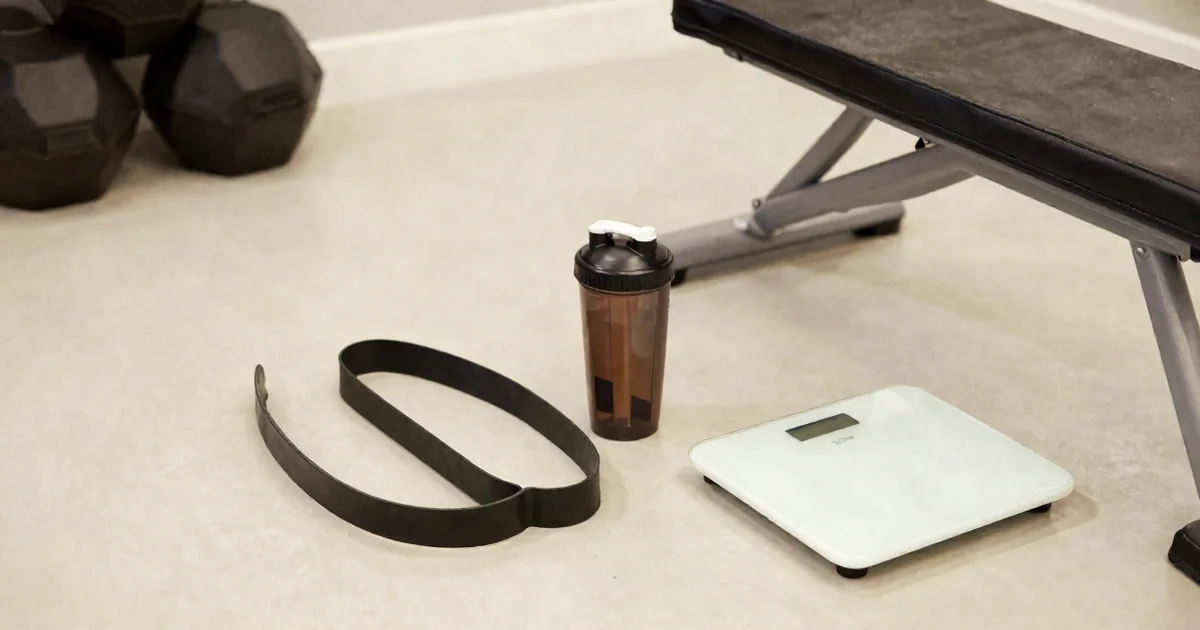
- Body composition: use a smart scale like the Wyze Scale X (around $34 on Amazon) that estimates body fat percentage and lean mass trends over time
- Strength benchmarks: are your lifts maintaining or improving? That is the most reliable indicator of muscle preservation
- Measurements: waist circumference decreasing while arm and thigh measurements hold steady is a positive sign
- Energy and function: can you carry groceries, climb stairs, and perform daily activities without increased difficulty?
If your strength numbers are declining consistently, it is a signal to increase protein intake, adjust training volume, or discuss your rate of weight loss with your prescribing physician.
Building a Sustainable Approach
GLP-1 medications are a tool - an effective one - but they work best when paired with deliberate lifestyle strategies. The patients who retain the most muscle during GLP-1-assisted weight loss are those who prioritize resistance training 3-4 times per week, consume adequate protein (1.6-2.2 g/kg/day), apply progressive overload to their training, and track body composition rather than just scale weight.
The goal is not to fight the medication but to steer the weight loss toward fat and away from muscle. With the right approach, you can achieve meaningful fat loss while preserving the lean tissue that supports your metabolism, strength, and long-term health.
This content is for educational purposes only and not medical advice. Consult healthcare professionals before starting new health or fitness programs. Always discuss exercise and nutrition changes with your prescribing physician when taking GLP-1 medications.
Explore more health strategies at TopicNest Health.
TopicNest
Contributing writer at TopicNest covering health and related topics. Passionate about making complex subjects accessible to everyone.