Table of Contents
Yoga for Back Pain: 8 Poses That Actually Help
Lower back pain affects 8 in 10 people at some point in their lives. For many, it becomes a recurring or chronic condition that limits daily movement and reduces quality of life. The instinct is often to rest, but controlled movement tends to help more than prolonged stillness.
A 2024 randomized controlled trial published in JAMA Network Open followed 140 patients with chronic low-back pain through a 12-week yoga program. Participants reported reduced pain, improved physical functioning, better sleep, and decreased use of pain medication. Notably, the benefits persisted for up to 24 weeks after the program ended - and online yoga proved as effective as in-person sessions.
Why Back Pain Happens
Most chronic lower back pain involves a combination of weak core muscles, tight hip flexors from prolonged sitting, poor postural habits, and reduced spinal mobility. Yoga addresses all four simultaneously through a combination of strengthening, stretching, and body awareness training.
The American College of Physicians recommends nonpharmacological treatments - including yoga - when standard therapy has been insufficient. The 2020 Agency for Healthcare Research and Quality concluded that yoga improved pain and function for low-back pain in the short term and intermediate term.
Reducing inflammation also plays a role. Research suggests yoga may lower inflammatory markers including interleukin-6, which is elevated in many chronic pain conditions.
8 Gentle Poses for Back Pain Relief
1. Child's Pose (Balasana) Kneel and sit back toward your heels. Walk your hands forward on the mat until your forehead rests on the ground. This gently lengthens the lumbar spine and decompresses the vertebrae. Hold 60 to 90 seconds. Use a yoga block under your forehead if your neck feels strained.
2. Cat-Cow (Marjaryasana-Bitilasana) On hands and knees, alternate between arching the back (cow) on inhale and rounding it (cat) on exhale. This is the most studied movement for improving lumbar mobility. Perform 10 slow rounds.
3. Supine Knee-to-Chest (Apanasana) Lie on your back and draw both knees to your chest. Hold 30 seconds. Then alternate single-leg, holding each for 30 seconds. This releases tension in the lumbar erectors.
4. Supine Spinal Twist (Supta Matsyendrasana) From supine, draw one knee to your chest, then guide it across your body while keeping both shoulders on the mat. Hold 30 to 60 seconds each side. This targets the piriformis and quadratus lumborum - two muscles frequently implicated in referred back pain.
5. Bridge Pose (Setu Bandha Sarvangasana) Lie on your back with knees bent and feet flat. Press into your feet and slowly lift your hips. Hold 20 to 30 seconds, lower slowly, repeat three times. This strengthens the glutes and hamstrings while maintaining neutral spine alignment.
6. Downward Facing Dog (Adho Mukha Svanasana) From hands and knees, tuck toes and press hips up and back into an inverted V shape. This elongates the entire posterior chain. Bend knees generously if hamstrings are tight. Hold 30 to 60 seconds. Use a yoga wheel to support this pose if shoulder tension limits range of motion.
7. Pigeon Pose (Eka Pada Rajakapotasana) - Modified From a tabletop position, bring one knee forward toward the same-side wrist and extend the opposite leg back. Lower hips toward the mat. Place a folded blanket under the front hip if it does not reach the floor. Hold 60 seconds each side. This releases the hip rotators, which when tight often contribute to lower back pain.
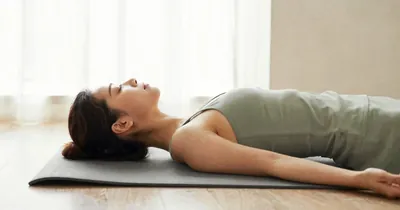
8. Legs-Up-the-Wall (Viparita Karani) Sit sideways next to a wall, then swing your legs up and lie back. Arms rest at your sides. Hold 3 to 5 minutes. This passive inversion reduces lumbar compression and promotes venous return from the legs. It also activates the parasympathetic nervous system, which reduces pain perception.
Poses to Avoid During Active Pain
During flare-ups, avoid deep forward folds with straight legs (standing forward bend at full depth), seated spinal twists taken beyond comfortable range, and any pose that causes sharp, shooting, or radiating pain. Discomfort and pain are different signals - mild stretch sensation is normal, sharp pain is not.
A 10-Minute Daily Back Care Routine
Combine these poses into a simple sequence: Cat-Cow (8 rounds) - Supine Knee-to-Chest (60 seconds) - Supine Spinal Twist (60 seconds each side) - Bridge Pose (3 repetitions) - Legs-Up-the-Wall (3 minutes).
This takes 10 to 12 minutes. Practiced daily, it addresses the primary drivers of recurring lower back pain rather than just relieving symptoms temporarily.
A supportive yoga mat with adequate cushioning is worth investing in when practicing floor poses for back care - thin mats increase discomfort during supine positions.
When to See a Doctor
Yoga is appropriate for most non-specific chronic lower back pain. Seek medical evaluation before starting if your pain follows trauma, includes numbness or tingling down the legs, worsens with rest, or is accompanied by bowel or bladder changes. These patterns may indicate conditions that require imaging or different treatment.
This content is for educational purposes only and not medical advice. Consult healthcare professionals before starting new health or fitness programs.
TopicNest
Contributing writer at TopicNest covering health and related topics. Passionate about making complex subjects accessible to everyone.