Table of Contents
Yoga for Beginners: Your First 7-Day Guide
Starting yoga does not require flexibility, experience, or an expensive studio membership. Research shows that consistent, short sessions - even 10 to 15 minutes a day - produce measurable improvements in mood, stress, and balance within the first week.
A 2018 review of 14 studies involving 1,084 participants found that yoga improved resilience and mental well-being across age groups and fitness levels. The key factor was not duration or intensity but consistency and frequency.
What to Expect in Your First Week
Before starting, set realistic expectations. Your hamstrings will not loosen in seven days. You will not achieve complex poses. What you can expect: early shifts in mood, a calmer nervous system, and the beginning of body awareness that builds with practice.
A 2018 survey of 1,820 young adults found that regular yoga practice was associated with better eating habits and increased physical activity in other areas - not because yoga directly caused those changes, but because regular practitioners tend to build broader health awareness over time.
Sleep may also improve. Yoga lowers cortisol, and lower cortisol in the evening supports easier sleep onset.
Days 1-2: Breathing and Seated Poses
Begin with breath. Sit cross-legged or on a chair with your spine upright. Inhale through the nose for four counts, exhale for six counts. Do this for five minutes. This extended exhale activates the parasympathetic nervous system - the body's rest-and-digest mode.
Add two seated poses:
Seated Cat-Cow: Hands on knees. Inhale, arch your back and look up. Exhale, round your spine and look down. Repeat 8 times slowly.
Seated Forward Fold: Extend your legs straight on the floor or mat. Hinge at the hips and reach toward your feet. Hold for 30 seconds. Use a yoga strap if your hands do not reach your feet.
Days 3-4: Standing for Stability
A 2014 review found that 11 of 15 studies showed improvements in at least one balance outcome in healthy people who practiced yoga. Balance improves rapidly in early practice because the nervous system adapts quickly to new stability demands.
Add standing poses:
Mountain Pose (Tadasana): Stand with feet hip-width apart, arms at sides, weight even across both feet. Hold for one minute. This pose trains postural awareness more than it looks like it does.
Warrior I (Virabhadrasana I): Step one foot back about 90 cm. Front knee bends to 90 degrees. Arms rise overhead. Hold 30 seconds each side. Use yoga blocks under your hands if you need to adjust reach or stability.
Tree Pose (Vrksasana): Stand on one foot, place the other foot on the calf or inner thigh. Hold 20 to 30 seconds each side. Touch a wall if needed.
Days 5-6: Floor Work
Floor poses build the foundation for longer practices and address areas where most beginners hold tension - hips, lower back, and chest.
Child's Pose (Balasana): Kneel, sit back toward your heels, and extend arms forward on the mat. This is both a rest pose and an active stretch for the hips and spine. Hold 60 seconds.
Supine Twist: Lie on your back. Draw one knee to your chest, then guide it across your body. Arms out wide. Hold 30 seconds each side. This decompresses the lumbar spine.
Bridge Pose: Lie on your back, knees bent, feet flat. Press into your feet and lift your hips. Hold 20 to 30 seconds. This is a gentle backbend that strengthens the posterior chain.
Day 7: Linking Into a 10-Minute Flow
On day seven, connect the poses you have learned into a continuous sequence. Move with the breath: each inhale initiates a movement, each exhale deepens or releases it.
Sample flow: Child's Pose (1 minute) - Cat-Cow (8 rounds) - Mountain Pose (30 seconds) - Warrior I left side - Warrior I right side - Bridge Pose (30 seconds) - Supine Twist (30 seconds each side) - Seated breathing (2 minutes).
This takes 10 to 12 minutes. Performing it without stopping gives you the experience of yoga as a connected practice, not a list of exercises.
Equipment You Actually Need
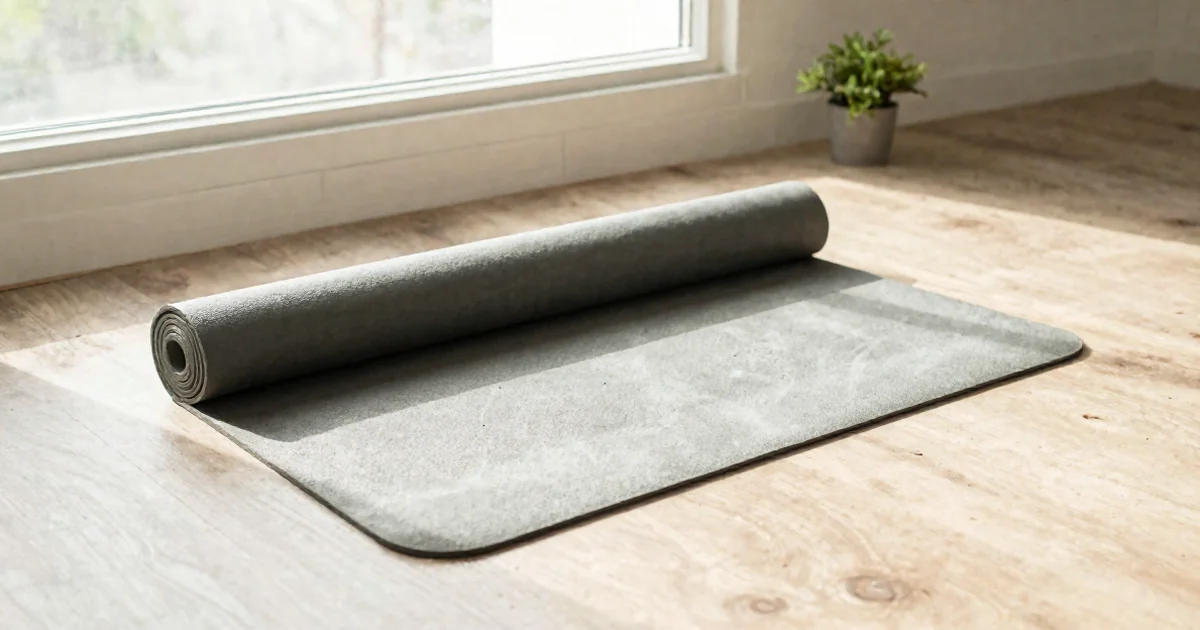
A yoga mat is the one piece of equipment worth buying. A good mat provides grip and cushioning that bare floors cannot. The BalanceFrom yoga mat is well-regarded for beginners and reasonably priced.
Blocks and straps extend your reach and make poses accessible at any flexibility level. They are not beginner tools you will discard later - experienced practitioners use them to deepen poses.
Building the Habit After Day 7
The research finding that consistency matters more than frequency applies here: three 15-minute sessions per week produce better outcomes than one 60-minute session per week. Schedule your sessions at the same time each day to reduce friction.
Progress in yoga tends to be nonlinear. There will be days where everything feels easier and days where poses feel harder than they did in week one. Both are normal.
After week one, add one new pose per week or extend your daily flow by two to three minutes. By week four, you will have a personal practice that reflects your body's specific needs.
This content is for educational purposes only and not medical advice. Consult healthcare professionals before starting new health or fitness programs.
TopicNest
Contributing writer at TopicNest covering health and related topics. Passionate about making complex subjects accessible to everyone.