Table of Contents
Yoga for Better Sleep - Evening Wind-Down Routine
Sleep quality affects nearly every aspect of health, from cognitive function to immune response. Research shows that yoga practices specifically designed for evening relaxation can significantly improve sleep onset and duration. Unlike vigorous exercise, which can be stimulating, gentle yoga combines movement, breath control, and mindfulness to signal the nervous system that it is time to rest.
Why Yoga Helps Sleep
The connection between yoga and improved sleep involves multiple physiological mechanisms. Studies demonstrate that regular yoga practice reduces cortisol levels, the stress hormone that often keeps people awake. The parasympathetic nervous system - responsible for rest and digestion - becomes more active during slow, deliberate movements paired with controlled breathing.
Research published in sleep medicine journals indicates that participants who practiced bedtime yoga fell asleep 10-15 minutes faster than control groups. They also reported fewer nighttime awakenings and better overall sleep quality. The practice appears particularly effective for those experiencing insomnia related to anxiety or racing thoughts.
The breathing techniques incorporated into yoga sequences directly influence heart rate variability, a marker of nervous system balance. When breathing slows to 5-6 breaths per minute, the body naturally shifts into a more relaxed state. This physiological change makes the transition to sleep smoother and more natural.
15-Minute Bedtime Sequence
This sequence follows a logical progression from standing to seated to reclined positions, mirroring the natural movement toward sleep. Each pose builds on the previous one, gradually lowering energy levels and preparing the body for rest.
Standing Forward Fold (2 minutes): Stand with feet hip-width apart, approximately 15-20 cm between the heels. Bend forward from the hips, letting the head hang heavy. The knees can bend slightly to reduce strain on the hamstrings. This inversion brings fresh blood to the brain while releasing tension in the spine and shoulders. Practitioners report a sensation of mental clarity followed by calm.
Cat-Cow Stretches (2 minutes): Move to hands and knees, with hands directly under shoulders and knees under hips. Alternate between arching the back (cow) and rounding it (cat), coordinating each movement with breath. Inhale for cow position, exhale for cat. This gentle spinal flexion releases accumulated tension from sitting and helps connect breath to movement.
Child's Pose (3 minutes): From hands and knees, sink the hips back toward the heels and extend arms forward. The forehead rests on the floor or a pillow. This restorative position compresses the abdomen gently with each exhale, creating a natural massage effect that many find deeply calming. The pose requires no muscular effort, allowing complete release.
Supine Spinal Twist (3 minutes per side): Lie on the back and draw the right knee toward the chest, then guide it across the body to the left side. Extend the right arm out to the side and turn the head to look right. This gentle twist releases lower back tension and massages internal organs. The crossing action of the legs creates a subtle compression that many practitioners find soothing.
Legs-Up-the-Wall (5 minutes): Position yourself so your sitting bones are as close to the wall as comfortable, then extend legs up the wall. Arms rest by the sides, palms facing up. This mild inversion helps drain fluid from the legs and signals the nervous system that active time has ended. Studies show this position can reduce blood pressure and heart rate within minutes.
Poses to Do in Bed
Transitioning directly from yoga to sleep eliminates the gap where alertness might return. These poses require no special equipment and can be performed under the covers.
Supine Butterfly: Lie on your back and bring the soles of the feet together, allowing the knees to fall open to the sides. Place hands on the belly to feel the breath. This hip-opening position releases tension in the pelvic area and creates a sense of openness and vulnerability that supports letting go.
Reclining Spinal Twist: From lying flat, draw both knees toward the chest, then let them fall to one side while extending arms in a T-shape. The gentle compression on alternating sides of the torso has a calming, grounding effect. Hold each side for 1-2 minutes.
Supported Bridge: Lie on your back with knees bent and feet flat, about 30 cm from the hips. Lift the hips slightly and slide a pillow underneath the sacrum. The gentle backbend opens the chest and creates a feeling of supported relaxation. This position can be held for 3-5 minutes.
Breathing for Sleep
Breathing patterns directly influence nervous system state. These techniques specifically activate relaxation responses.
4-7-8 Breathing: Inhale through the nose for a count of four, hold the breath for seven counts, then exhale through the mouth for eight counts. The extended exhale triggers parasympathetic activation. Research shows this pattern can reduce anxiety and facilitate sleep onset within minutes. Practice 4-6 cycles.
Alternate Nostril Breathing: Using the right thumb, gently close the right nostril and inhale through the left for a count of four. Close the left nostril with the right ring finger, release the thumb, and exhale through the right for four counts. This alternating pattern balances the nervous system and quiets mental chatter. Studies indicate it reduces heart rate and promotes calm within 5-10 minutes.
Natural Breath Observation: Simply notice the breath without changing it. Observe where the breath is felt most strongly - the nostrils, the chest, or the belly. When the mind wanders, gently return attention to the breath. This meditation technique reduces the mental activation that often delays sleep.
Creating an Evening Ritual
Consistency reinforces the sleep-promoting effects of yoga. The nervous system learns to anticipate rest when the same sequence occurs nightly.
Timing matters: Begin the routine 30-60 minutes before desired sleep time. This creates a buffer between active time and rest, allowing the body to transition gradually.
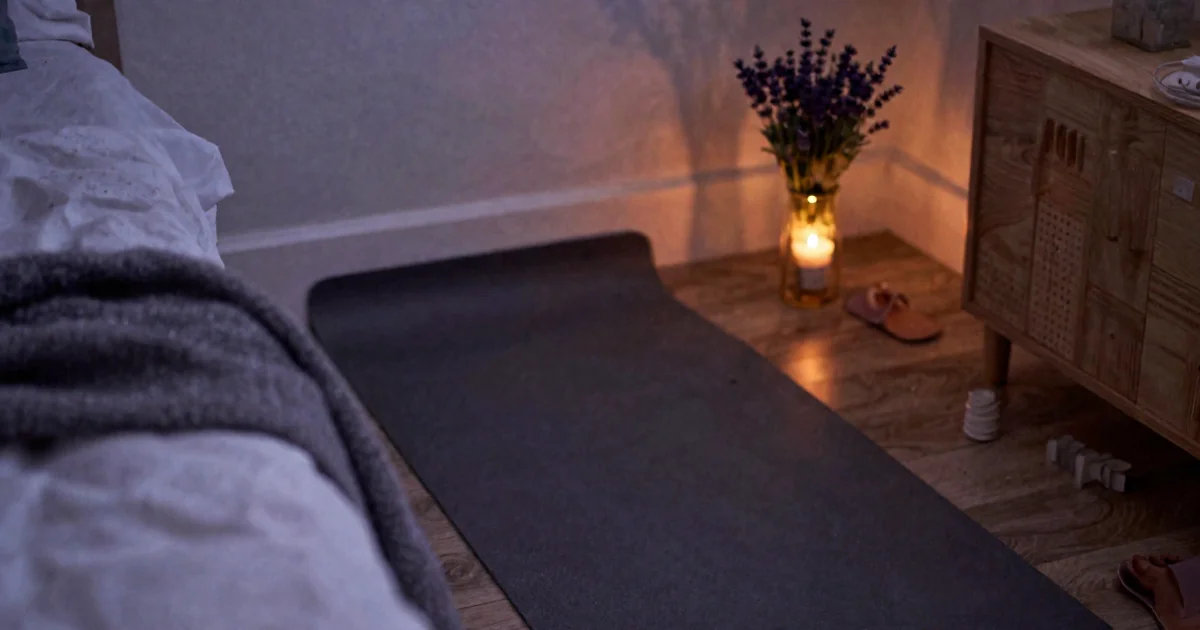
Environment supports practice: Dim lighting signals the brain to begin melatonin production. Research shows that exposure to bright light in the evening delays circadian rhythms. Use warm, low-level lighting during the practice.
Temperature considerations: A slightly cool room, around 18-20°C, supports sleep. The body's core temperature naturally drops before sleep, and a cooler environment facilitates this process.
Screen-free zone: Avoid digital devices for at least 30 minutes before the practice. Blue light from screens suppresses melatonin production and increases alertness, counteracting the calming effects of yoga.
Progressive routine: Start with just 5-10 minutes if a full sequence feels overwhelming. The consistency of practice matters more than duration. Studies show that even brief evening relaxation practices improve sleep when performed regularly.
The integration of movement, breath, and mindfulness creates multiple pathways to improved sleep. Unlike sleep medications, yoga addresses underlying nervous system imbalances rather than simply suppressing wakefulness. Practitioners report not just falling asleep faster, but experiencing more restorative sleep with fewer disruptions.
Disclaimer: This content is for educational purposes only and not medical advice. Consult healthcare professionals before starting new health or fitness programs, especially if you have existing health conditions or injuries.
TopicNest
Contributing writer at TopicNest covering health and related topics. Passionate about making complex subjects accessible to everyone.