Table of Contents
The ROI of Kitchen Swaps
Zero-waste content often focuses on environmental guilt: "Save the planet by eliminating all plastic!" That's motivating for some people. For others, it triggers overwhelm and avoidance.
A different angle: some reusable kitchen products literally save money. You spend $20 once instead of $20 annually on disposables. After one year, you're ahead financially. The environmental benefit is a bonus, not the primary selling point.
This isn't about transforming your entire kitchen overnight. It's about identifying the 5 disposable items you use most frequently and replacing them with durable alternatives. That's where the financial return happens.
Swap 1: Replace Plastic Wrap With Beeswax Wraps
The disposable cost: Average household uses roughly 12-15 feet of plastic wrap weekly. That's 624-780 feet annually. A standard 200-foot roll costs $4-6. You're buying 3-4 rolls per year: $12-24 annually.
The reusable alternative: Bee's Wrap Beeswax Food Wraps - 3-pack with small, medium, and large sizes.
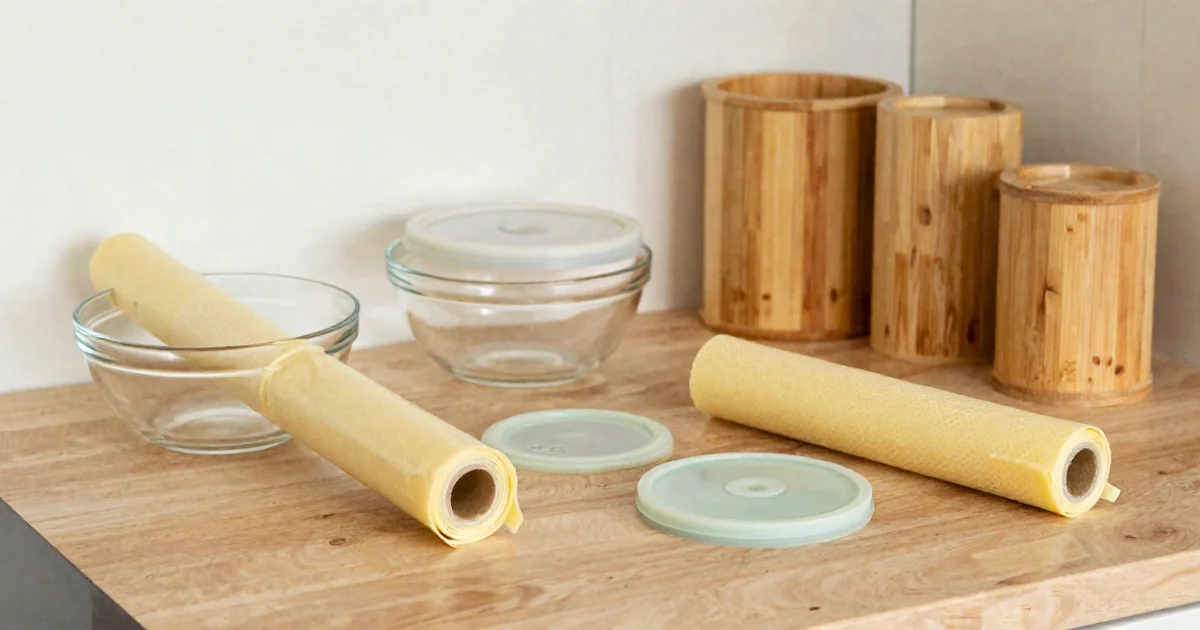
Organic cotton coated in beeswax, jojoba oil, and tree resin. Wraps mold around bowls, cover cut produce, wrap sandwiches. Rinse with cool water and mild soap after each use. Air dry. Lasts roughly 12 months with regular use, then compost.
Price: $19-25.
Break-even timeline: 12-24 months, depending on plastic wrap usage.
Why this works: You're already spending $12-24/year on plastic wrap. Beeswax wraps cost roughly the same upfront but last a full year. After year one, you're saving $12-24 annually.
Beeswax wraps don't work for everything. They can't go in the microwave or cover hot food (the wax melts). They're not airtight like plastic. But for 70-80% of plastic wrap uses - covering bowls in the fridge, wrapping produce, packing lunches - they work fine.
Swap 2: Replace Aluminum Foil With Silicone Lids
The disposable cost: Aluminum foil costs $3-5 for a 75-square-foot roll. Average household uses 150-200 square feet annually (2-3 rolls): $6-15/year.
The reusable alternative: Modfamily Silicone Stretch Lids - 7-pack including XL size.
Food-grade platinum silicone. 7 sizes from 3 inches (espresso cup) to 10 inches (large mixing bowl). Stretches to cover containers of various sizes. Microwave, oven, freezer, and dishwasher safe. Lasts 5+ years.
Price: $12-16.
Break-even timeline: 1-2 years.
Why this works: Foil gets used once and thrown away. Silicone lids get washed and reused hundreds of times. After 2 years, you've saved $12-30 in foil costs.
These work for most foil uses: covering leftovers in the fridge, sealing bowls in the microwave, storing cut fruit. They don't work for wrapping food for baking (foil-wrapped potatoes, for example). For that specific use, keep a small roll of foil on hand.
Alternative option: ExcelGadgets Silicone Stretch Lids - 6-pack, slightly larger sizes (3-10 inches), see-through design.
Price: $14-18.
Swap 3: Replace Paper Towels With... Less Paper Towels
Full disclosure: completely eliminating paper towels is hard. They're genuinely useful for cleaning up cat vomit, draining bacon grease, and wiping down raw chicken residue. Things you don't want to put in your washing machine.
But most paper towel uses aren't that. They're wiping counters, drying hands, cleaning spills. Those can shift to washable cloths.
The disposable cost: Average household uses 2-3 rolls of paper towels weekly. That's 104-156 rolls annually. Generic paper towels cost roughly $1.50-2.50 per roll. Annual cost: $156-390.
The reduction strategy: Buy a pack of 12-24 microfiber cloths or old cotton t-shirts cut into squares. Use these for 80% of paper towel tasks. Reserve actual paper towels for the genuinely gross stuff.
If you reduce paper towel consumption by 70%, you're now buying 31-47 rolls annually instead of 104-156. Savings: $109-273/year.
You don't need to buy fancy "reusable paper towels." Old t-shirts work fine. Cut them into 10x10 inch squares. Toss in the washing machine with regular laundry.
Swap 4: Replace Disposable Storage Bags With Silicone Bags
The disposable cost: Ziplock bags cost roughly $0.10-0.20 per bag depending on size. If you pack lunches daily (5 days/week, 50 weeks/year), that's 250 bags annually: $25-50.
The reusable alternative: Silicone food storage bags (various brands on Amazon, $20-35 for a set of 4-6 bags).
These work like Ziplocks but wash and reuse. Dishwasher safe, freezer safe, some are microwave safe. Lifespan: 2-3 years with daily use.
Break-even timeline: 6-18 months.
Why this works: If you pack lunches or meal prep regularly, you're using a lot of disposable bags. Silicone bags pay for themselves within one year through eliminated plastic bag purchases.
If you rarely use storage bags (maybe 20-30 annually), this swap doesn't make financial sense. The break-even takes 5+ years. Stick with disposable bags in that case.
Swap 5: Replace Plastic Produce Bags With Mesh Bags
The disposable cost: Technically free (grocery stores provide them), but they accumulate in drawers and eventually get thrown away.
The reusable alternative: Mesh produce bags ($8-15 for a set of 5-10 bags). Washable, lightweight, see-through so cashiers can identify produce.
Break-even timeline: Never, financially. This swap is purely environmental.
Why include it: If you're already making 4 swaps that save money, adding one purely environmental swap feels easier. You've "earned" the right to make one choice that doesn't directly save money.
Mesh bags also organize your fridge better than loose produce rolling around in plastic.
Bonus: Replace Plastic Food Storage With Sustainable Containers
The disposable cost: Plastic food storage containers crack, stain, and warp over time. Average household replaces these every 2-3 years. A set of 10-20 containers costs $20-40.
The durable alternative: otovioia Bamboo Storage Bins - 2-pack stackable bamboo boxes for dry goods (rice, pasta, cereal, snacks).
Price: $25-32.
These last decades, not years. Bamboo is naturally antimicrobial and doesn't absorb odors like plastic. Stackable design saves space in small kitchens.
This isn't replacing all food storage - you still need containers for wet leftovers. But dry goods (the bulk of pantry storage) shift to bamboo, reducing plastic container purchases over time.
What Actually Saves Money
Not every "eco-friendly" swap makes financial sense. Here's the reality check:
Good ROI (pays for itself within 1-2 years):
- Beeswax wraps replacing plastic wrap
- Silicone lids replacing aluminum foil
- Silicone bags replacing Ziplocks (if you use many bags)
- Reducing paper towel consumption by 70%
Questionable ROI (takes 3+ years to break even):
- Reusable straws (unless you're buying $30/month in smoothies)
- Beeswax wraps for cheese (specialty use)
- Silicone baking mats (parchment paper is cheap)
No financial ROI (purely environmental):
- Mesh produce bags
- Reusable shopping bags (unless your area charges bag fees)
- Bamboo utensils
Focus on the swaps with good ROI first. Those build momentum. Once you're saving $100-200 annually, adding one or two purely environmental swaps feels manageable.
The Actual Math
Year 1 costs:
- Beeswax wraps: $20
- Silicone lids (7-pack): $14
- Microfiber cloths: $15
- Silicone storage bags: $25
- Bamboo containers: $28
- Total: $102
Year 1 savings (eliminated disposables):
- Plastic wrap: $18
- Aluminum foil: $10
- Paper towels (70% reduction): $200
- Ziploc bags: $40
- Total: $268
Net Year 1: +$166 savings
Year 2+ savings (no new purchases needed):
- Annual disposable costs eliminated: $268
- Replacement costs: $20 (new beeswax wraps every 12 months)
- Net Year 2+: +$248 annual savings
Over 5 years, you've saved $1,158 by spending $102 upfront plus $80 in beeswax wrap replacements.
Starting Without Overwhelm
You don't need to buy all 5 swaps at once. That's $100+ upfront, which feels like a lot even if it saves money long-term.
Start with the swap that targets your highest disposable expense:
- If you use lots of paper towels: Start with microfiber cloths. Biggest immediate savings.
- If you meal prep or pack lunches: Start with silicone bags.
- If you're constantly buying plastic wrap: Start with beeswax wraps.
Make one swap. Use it for 2-3 months. Once it feels normal, add the next swap.
Within one year, you've transitioned to reusables without feeling like you overhauled your entire kitchen in one overwhelming weekend.
Disclaimer: Product longevity and savings calculations are estimates based on average household usage. Your actual savings will vary based on consumption patterns and product care. This article provides general guidance, not financial advice.
TopicNest
Contributing writer at TopicNest covering lifestyle and related topics. Passionate about making complex subjects accessible to everyone.