Table of Contents
Trying to quit a bad habit through pure willpower sounds logical. Just stop doing the unwanted behavior, right? Yet research consistently shows this elimination approach has poor long-term success rates. Most people eventually return to old patterns within weeks or months.
The reason is simple: bad habits fill a need. Whether that need is dopamine hits, stress relief, boredom reduction, or social connection, the behavior exists for a reason. Removing it creates a void. Your brain keeps searching for something to fill that gap.
Why Elimination Often Fails
When you try to eliminate a habit without replacing it, you rely entirely on restraint. This depletes willpower reserves throughout the day. Research from behavioral psychology shows willpower functions like a muscle - it fatigues with use.
Say you decide to quit checking social media. Every time you feel the urge, you must actively resist. That resistance requires mental energy. By evening, your willpower is exhausted. The habit returns.
Another issue: negative focus. "Don't think about scrolling Instagram" makes you think about scrolling Instagram. The attempt to suppress actually reinforces the neural pathway you're trying to weaken.
The Substitution Strategy
Substitution takes a different approach. Instead of creating a void, you fill the need with a healthier alternative. The key is matching the replacement behavior to the original need.
If social media provides dopamine hits, find another dopamine source. If snacking relieves stress, find another stress outlet. If procrastination delays anxiety, find gentler ways to ease into tasks.
This works because you're not fighting your brain's wiring - you're redirecting it. The neural pathway stays active, but the destination changes.
Real Substitution Scenarios
Replacing Digital Scrolling
Social media scrolling typically fills one of three needs: boredom relief, novelty seeking, or connection desire.
For boredom relief: Keep a book or Kindle near your phone. When you reach for your device, pick up the book instead. James Clear's Atomic Habits offers detailed frameworks for this kind of environment design - making good behaviors easier than bad ones.
For novelty seeking: Subscribe to a quality newsletter or podcast. You still get new content, but without infinite scroll mechanics.
For connection: Text a friend directly instead of scrolling feeds. Real conversation provides deeper satisfaction than passive consumption.
Thibaut Meurisse's Dopamine Detox explores why modern apps create such strong pull - understanding the mechanism helps you design better substitutions.
Replacing Unhealthy Snacking
Stress snacking rarely comes from actual hunger. It provides oral stimulation, stress relief, or breaks from work.
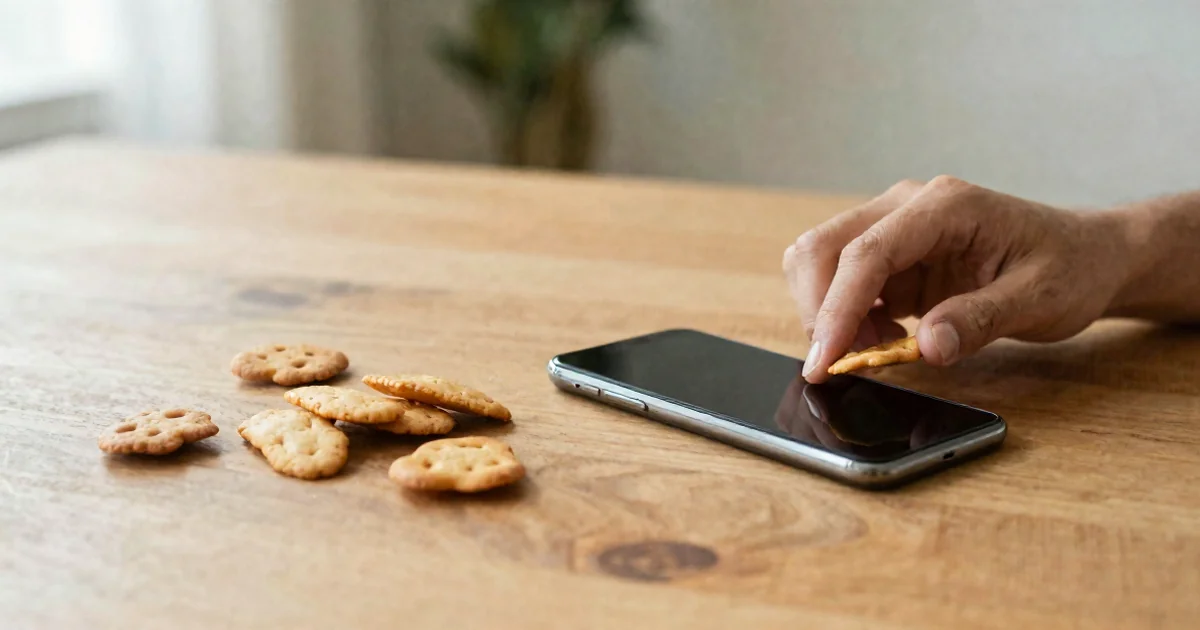
Keep better alternatives visible: Replace cookie jars with bowls of nuts, fruit, or carrots. You're not eliminating snacking - you're upgrading it.
Address the real need: If you snack when stressed, try a 2-minute breathing exercise instead. If you snack for breaks, take a short walk. Match the substitution to the underlying trigger.
Replacing Procrastination Patterns
Procrastination often masks anxiety about starting difficult tasks. The delay behavior (often scrolling, gaming, or cleaning) provides temporary relief from that discomfort.
The 5-minute rule: Instead of "start the project," substitute with "work for just 5 minutes." This addresses the anxiety (starting feels less overwhelming) while moving you forward. After 5 minutes, continuing usually feels easier.
Task switching, not avoidance: If you're procrastinating on writing, switch to research. If you're avoiding email, do a small admin task instead. You're still productive, just redirecting the resistance.
How to Design Effective Substitutions
Successful habit replacement requires matching three elements:
1. Same trigger Identify what prompts the bad habit. Boredom? Stress? Specific times? Your substitution should activate at the same trigger point.
2. Similar reward The replacement must satisfy the same need. If your habit provides relaxation, your substitution needs to relax you too. Mismatched rewards won't stick.
3. Equal or lower friction The substitution cannot be harder than the original habit. If scrolling Instagram takes 2 seconds but your replacement requires 10 minutes of setup, it won't work. Make the better choice easier.
Start with One Substitution
Don't attempt multiple habit replacements simultaneously. Pick your most disruptive bad habit and design one solid substitution for it.
Spend a week observing the pattern:
- What triggers it?
- What need does it fill?
- When does it happen most?
Then design a replacement that matches those specifics. Test and adjust. If the first substitution doesn't work, try another. The goal is finding what actually fits your life, not forcing an ideal that sounds good but feels impossible.
Track Progress Without Perfection
Substitution is not about perfect execution. Some days you'll default to the old habit. That's expected. What matters is the overall trend.
Track two simple metrics:
- How often did I use the substitution this week?
- How often did I fall back to the old habit?
If your ratio improves over time (more substitutions, fewer old patterns), you're succeeding. Progress matters more than perfection.
When Substitution Works Best
This approach works particularly well for habits driven by:
- Boredom (needs replacement stimulation)
- Stress (needs alternative relief)
- Routine (needs new pattern)
- Social cues (needs different response)
It works less well for habits driven by physical addiction (nicotine, alcohol, certain substances). Those may require medical support alongside behavioral strategies.
Implementation Timeline
Week 1: Observe the bad habit without changing it. Note triggers and needs.
Week 2: Design your substitution. Prepare any needed materials (books, snacks, etc).
Week 3-4: Implement the substitution. Expect inconsistency. Adjust as needed.
Week 5+: Evaluate and refine. If it's working, continue. If not, redesign.
Most substitutions take 3-4 weeks to feel natural. Give yourself that time before declaring success or failure.
Final Thoughts
Breaking bad habits does not require superhuman willpower. It requires smart redirection. When elimination fails, substitution often succeeds - not because it's easier, but because it works with your brain instead of against it.
Start with one habit. Design one substitution. Test, adjust, and give it time. Small redirections compound into significant behavioral change.
Disclaimer: Lifestyle advice should be adapted to individual circumstances and values. For habits involving substance addiction or serious behavioral health concerns, consult qualified healthcare professionals.
TopicNest
Contributing writer at TopicNest covering lifestyle and related topics. Passionate about making complex subjects accessible to everyone.