Table of Contents
Why Most Self-Care Routines Fail
The 2-hour Sunday spa ritual looks beautiful on Pinterest. In practice, it lasts three weeks before life gets busy and the routine disappears.
Self-care rituals fail when they require perfection. The all-or-nothing approach creates pressure instead of relief. Missed one day? The whole system feels broken.
Sustainable self-care works differently. It prioritizes consistency over intensity. A 10-minute daily practice outperforms a monthly spa day for stress management and mental health.
The key difference: friction. High-friction routines require motivation, time, and energy - resources that fluctuate. Low-friction routines happen even on difficult days.
This article explores how to build self-care rituals that stick by understanding habit psychology and removing barriers to consistency.
The Habit Loop: Building Automatic Routines
Habits form through a three-part loop: cue, routine, reward.
Cue: The trigger that initiates the behavior. Environmental cues work better than time-based ones. "After I brush my teeth" beats "at 9 PM" because brushing teeth happens consistently.
Routine: The behavior itself. Start smaller than feels necessary. A 5-minute practice creates less resistance than a 30-minute one. You can always extend it once the habit forms.
Reward: The immediate positive feeling that reinforces the loop. This happens naturally with self-care - relaxation, clean skin, pleasant scents - but only if the routine is short enough to complete without stress.
Example: Evening routine built on this loop.
Cue: Changing into pajamas Routine: Light a candle, 10-minute shower with aromatherapy steamer Reward: Relaxation response, pleasant scent
The routine takes 15 minutes total. No decision fatigue about whether there's "enough time." The cue (changing clothes) happens daily, making the routine automatic.
Products that reduce friction help. Shower steamers deliver aromatherapy benefits without setup time. No diffuser to clean, no oils to measure. Place one on the shower floor and go.
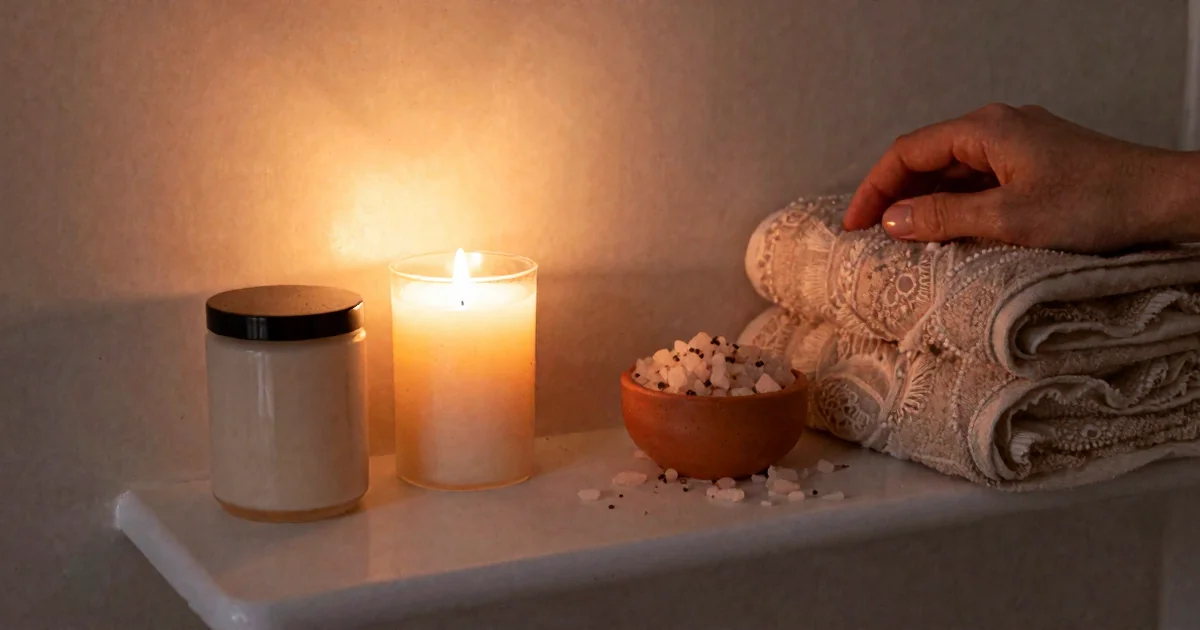
Similarly, scented candles in variety packs remove decision paralysis. Different scents for different needs - lavender for sleep, citrus for morning energy - without committing to large single-scent candles.
Starting Small: The 10-15 Minute Standard
Ambitious self-care plans collapse under their own weight. A 90-minute morning routine sounds transformative but requires waking up earlier, maintaining energy, and protecting that time from interruptions.
Starting small builds the habit first, then expands naturally.
Research shows consistency matters more than duration. A 10-minute practice done daily for 30 days creates stronger neural pathways than sporadic longer sessions.
Building blocks approach:
Week 1-2: Establish the simplest version. Example: 10-minute evening bath soak.
Week 3-4: Add one element if desired. Example: Add face mask or reading.
Month 2: Routine is automatic. Expand only if genuinely motivated.
The bath example demonstrates low-friction self-care. Epsom salt costs $8 and requires zero preparation beyond drawing a bath. Magnesium absorption helps with muscle relaxation and stress response.
Compare this to elaborate bath rituals requiring multiple products and extended commitment. The simple version happens more often, delivering more cumulative benefit.
Personalization Over Trends
Social media promotes uniform self-care aesthetics. Everyone should have a 5-step skincare routine, meditate daily, journal with specific prompts, and practice yoga.
Reality: self-care works when it matches your actual preferences and lifestyle.
Some people find showers more relaxing than baths. Others prefer movement over stillness. Some want social connection, not solitude.
The "right" self-care practice is one you'll actually do.
Questions for personalization:
Energy level: Do you prefer active practices (stretching, dancing) or passive ones (reading, listening to music)?
Time of day: Morning person or evening person? When does your body naturally want downtime?
Sensory preferences: What genuinely feels good? Warmth? Scents? Textures? Sounds?
Social needs: Alone time or connection time? Both are valid self-care.
Your routine might look nothing like popular recommendations - and still work better.
Removing Barriers to Consistency
Even well-designed routines fail if barriers exist.
Common barriers:
Setup time: Practices requiring preparation get skipped. Meditation apps eliminate setup. Pre-portioned bath products (steamers, individual sachets) remove measuring steps.
Decision fatigue: "What should I do for self-care today?" creates mental resistance. Fixed routines remove decisions.
Space requirements: Yoga in a small apartment competes with furniture. Shower-based practices use existing space.
Cleanup: Face masks that require 10 minutes of cleanup add friction. Sheet masks or peel-off options reduce this.
Cost: Expensive practices create guilt or financial stress, defeating the purpose. Budget-friendly basics (Epsom salt, library books, free meditation apps) remove this barrier.
Perfectionism: Belief that self-care must be "done right" prevents starting. Permission to do abbreviated versions on hard days maintains consistency.
Solution: Design your routine with barriers removed.
Example: Simple evening wind-down routine.
19:30 - Change into comfortable clothes (cue) 19:35 - Light candle, dim lights 19:40 - 10-minute shower with steamer 19:50 - Simple skincare (cleanser, moisturizer) 20:00 - Read or listen to podcast in bed
Total active time: 15 minutes. No elaborate setup. No cleanup beyond rinsing the shower. No special equipment beyond basic supplies. The routine survives busy days, travel, and low-energy periods.
Tracking Progress Without Obsession
Tracking helps identify patterns. Obsessive tracking creates new stress.
Simple tracking methods:
Habit streak apps: Check a box daily. Seeing the streak provides motivation. Missing a day doesn't erase progress.
Physical markers: Candle level shows how often you've used it. Empty bottles show consistency over time.
Feelings journal: Brief notes on mood and energy. Over weeks, patterns emerge showing which practices help most.
Avoid: Detailed time tracking, performance metrics, or comparison to others. These turn self-care into another obligation.
The goal is noticing what works, not achieving perfect adherence.
When Rituals Need Adjustment
Life changes. Effective self-care rituals adapt.
Signs a routine needs adjustment:
Dread: If the practice feels like obligation, something's wrong. Reduce frequency or try different activities.
Skipping repeatedly: Consistent skipping signals a barrier exists. Identify and remove it rather than fighting willpower.
Life circumstances changed: New job, new schedule, new living situation - all require routine updates.
Boredom: Rotate practices seasonally. Different scents, different activities, different timing.
Self-care rituals should reduce stress, not create it. When something stops working, change it without guilt.
Building Your Sustainable Routine
Start with one small practice. Make it so easy that skipping feels harder than doing it.
Use existing routines as anchors. Attach new practices to established habits.
Remove friction wherever possible. Preset supplies. Eliminate decision points. Minimize cleanup.
Personalize ruthlessly. Ignore trends that don't match your preferences.
Track lightly to notice patterns, but don't measure performance.
The ritual that sticks is the one designed for your actual life - not an idealized version of it. Small, consistent practices deliver more benefit than perfect routines that collapse under pressure.
Start tonight with one 10-minute practice. Tomorrow it gets slightly easier. In a month, it's automatic.
Disclaimer: This article provides general wellness information and should not replace professional medical or mental health advice. Individual needs vary. Consult healthcare providers for personalized guidance.
TopicNest
Contributing writer at TopicNest covering lifestyle and related topics. Passionate about making complex subjects accessible to everyone.