Table of Contents
Household cleaning products represent one area where environmental and health impacts directly overlap. Conventional cleaners contain chemicals that affect indoor air quality while contributing to water pollution. Eco-friendly alternatives work effectively for most cleaning tasks without these drawbacks.
Understanding Conventional Cleaner Problems
Traditional cleaning products create several issues worth examining.
Indoor air quality: Many cleaners release volatile organic compounds (VOCs) that persist in indoor air for hours or days. These chemicals cause headaches, respiratory irritation, and long-term health effects. Enclosed spaces concentrate these compounds.
Water pollution: Cleaning products wash down drains into water treatment systems. Many chemicals pass through treatment plants unchanged, entering rivers and ecosystems. Phosphates cause algae blooms. Surfactants harm aquatic life.
Packaging waste: Single-use plastic bottles dominate the cleaning product market. These containers contribute significantly to household plastic waste. Most aren't recycled despite recyclable materials.
Misleading labels: Terms like "natural" and "eco-friendly" lack regulation on cleaning products. Companies use these terms without meaningful environmental standards. Reading ingredient lists reveals actual contents.
Categories of Eco-Friendly Cleaners
Several approaches exist for environmentally conscious cleaning.
Plant-based commercial products: These cleaners use ingredients derived from plants rather than petroleum. Effective formulations match conventional cleaner performance. Look for third-party certifications like EPA Safer Choice.
Concentrated formulas: Concentrated products use less packaging and reduce transportation emissions. Users dilute concentrates at home in reusable bottles. One concentrated bottle replaces multiple ready-to-use products.
Solid cleaning products: Bars, powders, and tablets eliminate plastic packaging. These formats work for dish soap, laundry detergent, and surface cleaners. Transportation costs decrease due to reduced weight.
DIY cleaning solutions: Simple ingredients like vinegar, baking soda, and castile soap handle most household cleaning. These require minimal processing and create little waste. Effectiveness varies by application.
All-Purpose Cleaners
General surface cleaning represents the most common household task.
Commercial options: Plant-based all-purpose cleaners effectively clean counters, tables, and appliances. Choose products in concentrated form or refillable containers. Avoid aerosol formats that use propellants.
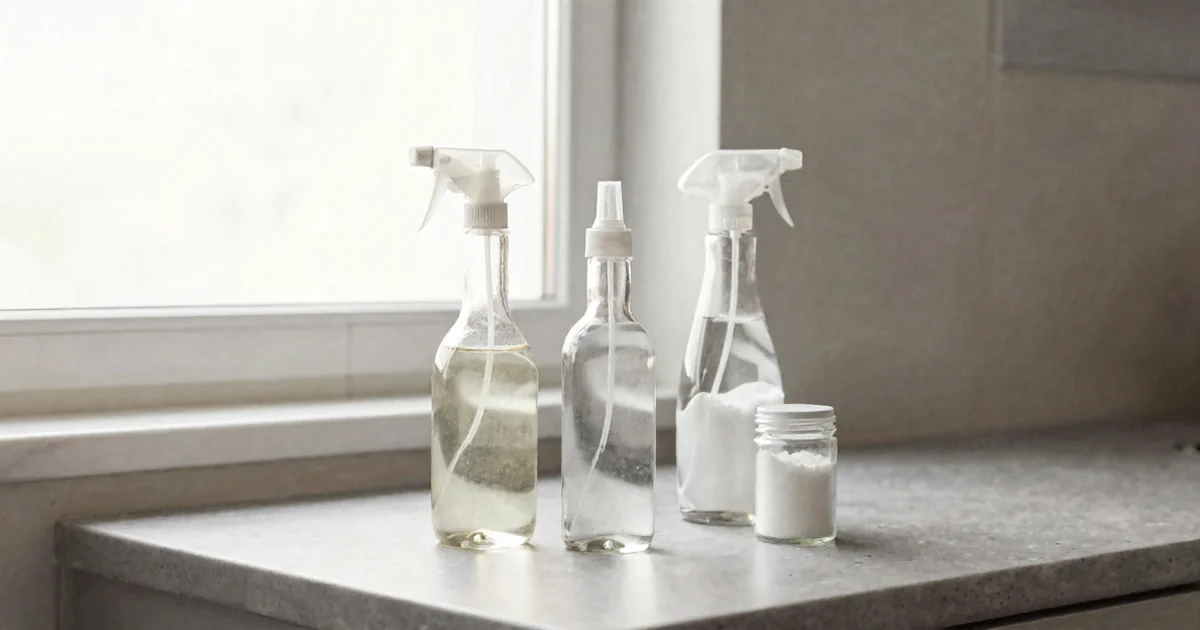
DIY alternative: Mix equal parts water and white vinegar in spray bottle. Add several drops of essential oil if desired for scent (tea tree oil adds antimicrobial properties). This solution handles most surfaces except stone countertops, which vinegar can etch.
Performance notes: Plant-based cleaners match conventional cleaners for everyday dirt and grime. Heavily soiled surfaces may require more scrubbing or stronger solutions. This applies to both commercial and DIY options.
Kitchen Cleaning
Kitchens require effective degreasing and food-safe cleaning.
Dish soap: Concentrated plant-based dish soaps work effectively in small amounts. Solid dish soap bars eliminate plastic bottles entirely. These options clean dishes without petroleum-derived ingredients.
Degreasing needs: Kitchens accumulate grease requiring stronger solutions. Baking soda paste (3 parts baking soda to 1 part water) cuts through grease on stovetops and backsplashes. Commercial citrus-based degreasers use natural solvents.
Disinfecting surfaces: Most kitchen cleaning requires removing dirt, not killing all bacteria. For actual disinfection (during illness or after raw meat), hydrogen peroxide or rubbing alcohol works effectively. These evaporate without residue.
Drain maintenance: Prevent clogs with regular maintenance using baking soda and vinegar. Pour 1/2 cup baking soda down drain, follow with 1 cup vinegar, wait 15 minutes, flush with hot water. This prevents buildup requiring harsh chemical drain cleaners.
Bathroom Cleaning
Bathrooms present specific cleaning challenges involving soap scum, mildew, and mineral deposits.
Toilet cleaning: Baking soda and vinegar clean toilet bowls effectively. Sprinkle baking soda around bowl, add vinegar, scrub, let sit 15 minutes, flush. For tougher stains, citric acid works on mineral deposits.
Soap scum removal: Vinegar dissolves soap scum on tubs and shower doors. Spray undiluted vinegar, let sit 10-15 minutes, wipe clean. For stubborn buildup, make paste with baking soda.
Mold and mildew: Hydrogen peroxide (3% solution) kills mold without toxic fumes. Spray affected areas, let sit 10 minutes, scrub clean. Address moisture sources to prevent recurrence.
Hard water stains: Vinegar or citric acid solutions remove mineral deposits from faucets and showerheads. Soak removable fixtures in solution. For fixed surfaces, apply soaked cloth and leave 30+ minutes.
Laundry Products
Laundry detergents significantly impact household chemical exposure and water systems.
Detergent selection: Choose concentrated formulas, powder formats, or detergent strips. These reduce packaging waste. Look for products free of optical brighteners, synthetic fragrances, and dyes.
Washing temperature: Most laundry cleans effectively in cold water. This saves energy while preserving fabric quality. Hot water remains necessary only for sanitizing bedding during illness.
Fabric softener alternatives: White vinegar softens laundry in rinse cycle without chemical residue. Wool dryer balls reduce static and drying time. Conventional fabric softeners coat fibers with chemicals that reduce absorbency.
Stain treatment: Most stains respond to simple pretreatment. Dish soap works on grease. Hydrogen peroxide removes blood and organic stains. Baking soda paste tackles various marks. Apply before washing.
Floor Cleaning
Floor cleaning requirements vary by surface type.
Hard floors: Vinegar solution (1/2 cup vinegar per gallon water) cleans tile, vinyl, and laminate effectively. Wood floors require gentler cleaning - use manufacturer recommendations or products specifically formulated for wood.
Carpets and rugs: Baking soda deodorizes carpets. Sprinkle, let sit 15 minutes, vacuum. For stains, blot immediately, apply club soda or diluted dish soap, blot again. Steam cleaning uses only water for deep cleaning.
Mopping methods: Microfiber mops clean more effectively than traditional mops while using less water and cleaner. These washable pads reduce waste from disposable cleaning pads.
Glass and Window Cleaning
Streak-free glass cleaning doesn't require specialty chemicals.
Vinegar solution: Mix 1 part vinegar to 4 parts water. Spray on glass, wipe with microfiber cloth or newspaper. This creates streak-free shine without ammonia fumes.
Technique matters: Cleaning method affects results more than product choice. Use microfiber cloths that don't leave lint. Wipe in one direction rather than circles. Clean glass on cloudy days - direct sun causes rapid drying and streaking.
Certifications and Labels
Third-party certifications help identify genuinely eco-friendly products.
EPA Safer Choice: Products meet strict ingredient standards for human and environmental safety. This certification requires transparency about all ingredients.
USDA Certified Biobased: Indicates percentage of content from renewable plant materials rather than petroleum. Higher percentages indicate more plant-based ingredients.
Green Seal: Independent certification evaluating environmental impact throughout product lifecycle. Standards cover ingredients, manufacturing, packaging, and performance.
EWG Verified: Environmental Working Group certification indicates products meet their strict standards for ingredient transparency and safety. Their database rates thousands of products.
Cost Comparisons
Eco-friendly cleaning affects household budgets differently depending on approach.
DIY solutions: Vinegar, baking soda, and castile soap cost pennies per use. Initial investment in reusable spray bottles and containers required. This represents the lowest-cost option.
Concentrated products: Higher upfront cost than conventional cleaners but comparable or lower per-use cost. One bottle replaces multiple conventional products.
Premium eco-brands: Often cost more than conventional products but comparable to conventional premium brands. Price reflects better ingredients and more sustainable business practices.
Long-term savings: Reduced health problems from chemical exposure create indirect savings. Better indoor air quality benefits respiratory health particularly for children and those with asthma.
Realistic Expectations
Eco-friendly cleaning works differently than conventional approaches.
Cleaning time: Natural cleaners sometimes require longer contact time or more physical scrubbing. Results match conventional cleaners but method differs.
Scent differences: Plant-based products smell different from conventional cleaners. Absence of synthetic fragrance doesn't indicate lack of cleaning power. Many people prefer natural scents or fragrance-free options.
Antibacterial claims: Most household cleaning requires removing dirt, not killing all bacteria. Over-sanitizing disrupts healthy microbiome exposure. Reserve disinfectants for situations requiring actual sanitization.
Gradual transition: Replace conventional cleaners as they empty rather than discarding full bottles. This reduces waste while spreading costs over time.
Reducing Cleaning Product Needs
Prevention reduces cleaning requirements entirely.
Regular maintenance: Light cleaning prevents buildup requiring harsh chemicals. Quick daily maintenance beats intensive periodic cleaning.
Doormats and shoe removal: Keeping outdoor dirt outside reduces floor cleaning needs significantly. This simple step cuts cleaning frequency.
Ventilation: Good airflow reduces moisture-related problems like mildew. This prevents need for mold-killing products.
Simplified product lineup: Most households need only 3-5 cleaning products total. All-purpose cleaner, dish soap, laundry detergent, and baking soda/vinegar handle nearly everything.
Beyond Individual Products
Systemic changes amplify individual choices.
Right to know: Support legislation requiring full ingredient disclosure for cleaning products. Current regulations allow "trade secret" ingredient hiding.
Refill infrastructure: Patronize stores offering cleaning product refills. Demand creates business incentive for expanding refill options.
Commercial cleaning: Workplace cleaning creates larger environmental impact than home cleaning. Advocate for eco-friendly commercial cleaning in offices, schools, and public buildings.
Conclusion
Eco-friendly cleaning products effectively handle household cleaning while reducing chemical exposure and environmental impact. Options range from commercial plant-based products to simple DIY solutions using pantry staples.
Start by replacing products as conventional cleaners run out. Focus first on products used most frequently or in poorly ventilated spaces. Most households successfully transition using 3-5 core products rather than specialized cleaners for every surface.
Effective cleaning depends more on technique and regular maintenance than chemical strength. Understanding this relationship reduces reliance on harsh chemicals while achieving cleaner homes.
Explore more lifestyle topics: Browse practical advice at TopicNest Lifestyle
Disclaimer: Lifestyle recommendations should be adapted to individual circumstances and sensitivities.
TopicNest
Contributing writer at TopicNest covering lifestyle and related topics. Passionate about making complex subjects accessible to everyone.