Table of Contents
Winter as Maintenance, Not Growth Season
Most indoor plant content assumes year-round growth. Buy this light setup, follow this fertilizer schedule, expect these results.
That's misleading for winter months. February in most climates offers 9-10 hours of weak daylight. Even south-facing windows provide insufficient light for tropical plants evolved under equatorial sun.
The realistic goal for February isn't growth. It's maintenance. Keep plants alive and healthy until March-April when natural light returns. Supplemental grow lights support that goal without requiring expensive full-spectrum setups.
Plants naturally slow down in winter. They're not dying - they're dormant. Adding light helps them maintain baseline health, not push new growth.
Understanding Light Requirements
Most houseplants fall into three categories:
Low-light tolerant: Pothos, snake plants, ZZ plants, philodendrons. These survive with minimal light but prefer moderate light. Winter windowsills usually provide enough.
Medium-light: Monsteras, prayer plants, most ferns, orchids. Need bright indirect light. Winter windows might not suffice without supplemental light.
High-light: Succulents, cacti, fiddle leaf figs, citrus trees. Require direct sun or very bright artificial light. Winter survival often needs grow lights.
If you're growing low-light plants, you probably don't need supplemental lights. Move them closer to windows. They'll be fine.
If you're growing medium to high-light plants, supplemental light prevents leaf drop, yellowing, and leggy growth.
Budget Option: Clip-On Lights for Small Collections
Best for: 5-15 small to medium plants on shelves or desks.
FECiDA 3-Pack Clip Grow Lights - 9W full-spectrum LEDs with 360-degree gooseneck arms and built-in timers.
Price: $25-35 for three lights.
Why this works: Clip lights attach to shelves, desks, or headboards without drilling holes or taking up surface space. The gooseneck bends to direct light where needed. Timers automate the schedule (set once, runs daily).
Each light covers roughly 12-18 inches of space. That's 3-5 small plants per light. Three lights handle 9-15 plants total.
Limitations: Not powerful enough for high-light plants like succulents or citrus. Works for pothos, philodendrons, prayer plants, and small ferns.
Mid-Range Option: Desktop Grow Light
Best for: A dedicated plant shelf or desk setup with 8-12 plants.
LBW Desk Grow Light - Full-spectrum 208 LED panels with 10 brightness levels, 4/8/12-hour timer, height adjustable from 16-26 inches.
Price: $30-42.
Why this works: More powerful than clip lights but smaller than panel lights. Sits on a desk or shelf like a lamp. Height adjustment accommodates plants as they grow.
The 208 LED count provides enough intensity for medium-light plants. Still not sufficient for full-sun plants, but keeps monsteras, ferns, and prayer plants healthy through winter.
Limitations: Covers roughly 18-24 inches of horizontal space. Not ideal for large collections spread across multiple rooms.
Maximizing Natural Light: Rotating Window Shelf
Best for: Plants clustered near a window who need even light distribution.
VEBAVO Rotating Window Plant Shelves - 3-tier wooden shelf that rotates 360 degrees.
Price: $45-58.
Why this works: Winter sun hits windows at lower angles, creating uneven light. The back of your shelf gets less light than the front. Plants etiolate (stretch toward light) and develop lopsided growth.
Rotating the shelf every 2-3 days evens out light exposure. All sides of each plant get equal time facing the window.
This isn't a grow light - it's a tool to maximize existing natural light. If your window gets decent sun (even weak winter sun), rotation helps more than you'd expect.
Bonus: The wooden aesthetic looks intentional, not like lab equipment.
All-in-One Option: Propagation Station With Integrated Light
Best for: People who want to propagate cuttings while they root.
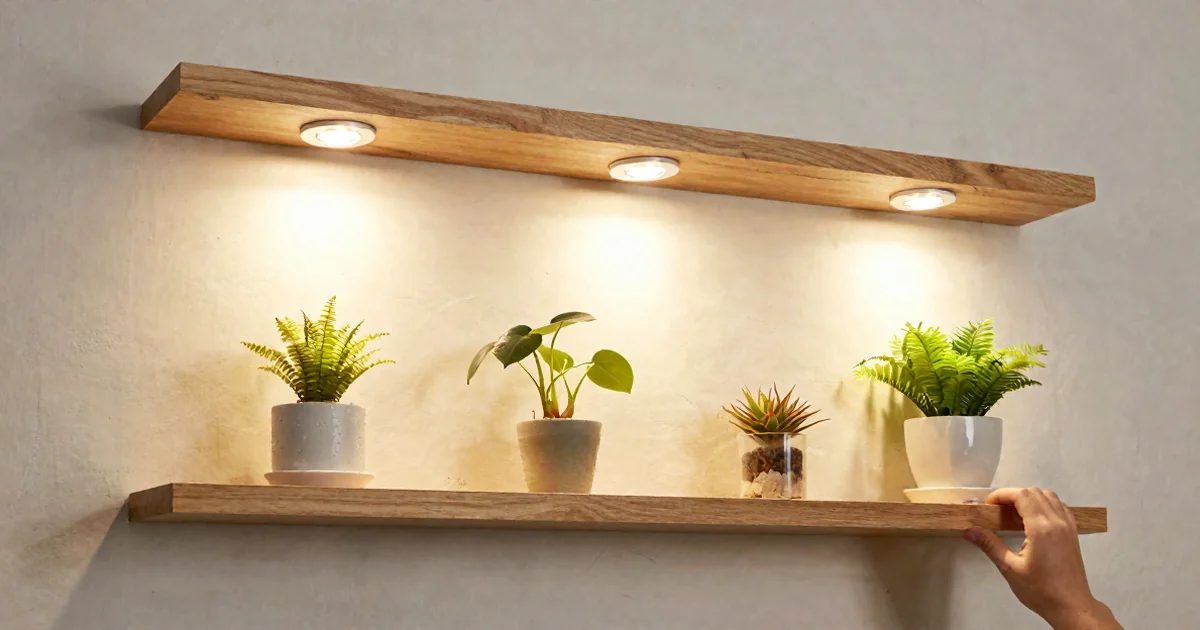
Lightalent Plant Propagation Station with LED - Wooden stand with 4 glass tubes for water propagation plus integrated 9-level dimmable LED strip.
Price: $35-48.
Why this works: February is ideal for propagation (low stress encourages rooting). This combines propagation and grow light in one setup. Take cuttings, place in water, position under light. Roots develop faster with supplemental light.
Once rooted, transfer to soil and move to a different location. Use the station for the next batch of cuttings.
Limitations: Only holds 4 cuttings at a time. Not suitable for large plant collections. This is a specialty tool for propagation enthusiasts.
High-Volume Option: Multi-Tier Plant Stand With Lights
Best for: Serious plant collectors with 20-40 small to medium plants.
EVAWOO Plant Stand with Grow Light - 8-tiered shelves with integrated grow lights, 49 inches tall, corner-friendly design.
Price: $65-85.
Why this works: If you have 20+ plants, buying individual clip lights for each shelf gets expensive ($50-70 for multiple 3-packs). This consolidates plants into one vertical space under one integrated light system.
Efficient use of floor space (fits in corners). Suitable for apartments or small homes without dedicated plant rooms.
Limitations: Requires assembly. Takes up vertical space (49 inches tall). Not subtle - this looks like a plant stand, not decorative furniture.
Setting Realistic Expectations
Supplemental grow lights in winter won't make plants thrive. They prevent decline.
With lights:
- Plants maintain existing foliage
- Minimal yellowing or leaf drop
- Slow growth (1-2 new leaves per month instead of none)
- Healthy color
Without lights:
- Increased leaf drop
- Yellowing from lack of chlorophyll production
- Leggy, stretched growth reaching for distant light
- Stunted or zero growth
The difference: lights keep plants healthy so they're ready to grow aggressively when natural light returns in spring.
Don't expect new growth explosions in February. That's not how winter works.
Light Duration and Intensity
Most grow lights include timers. Set them to 10-14 hours daily.
Why not 16-18 hours? Plants need dark periods for respiration. Constant light stresses them. 12 hours of light, 12 hours of darkness mimics natural photoperiods.
Intensity matters less than duration for maintenance. A low-intensity light running 12 hours daily helps more than a high-intensity light running 4 hours.
Dimmer lights work fine for low and medium-light plants. High-light plants (succulents, cacti) need brighter lights or longer durations (14 hours).
When Lights Don't Help
Grow lights can't fix:
- Overwatering: Most common winter problem. Plants need less water when growth slows. Lights don't change that.
- Cold stress: If your plant sits near a drafty window, moving it away from cold air helps more than adding light.
- Pest infestations: Spider mites and fungus gnats thrive in dry winter indoor air. Lights don't prevent pests.
Lights address one specific problem: insufficient light. If your plant is struggling for other reasons, adding light won't help.
The Cost-Benefit Analysis
Clip lights ($25-35 for 3):
- Electricity cost: roughly $3-5 per winter season (12 hours daily for 90 days)
- Total cost year 1: $28-40
- Lifespan: 2-3 years
- Cost per plant per winter: $1.50-2.50
Compare that to replacing dead plants. A 6-inch potted plant costs $8-15 at a nursery. If supplemental light saves even 2-3 plants from dying, it pays for itself.
Desktop light ($30-42):
- Electricity cost: $4-7 per winter
- Total cost year 1: $34-49
- Cost per plant per winter: $3-4 (assuming 10-12 plants)
Still cheaper than replacing plants.
Starting Small
You don't need lights for every plant. Start with the ones struggling most:
- Plants showing yellow leaves
- Plants with leggy, stretched growth
- High-light plants (succulents, fiddle leaf figs)
- Recently purchased plants not yet acclimated to your home's light
Leave low-light plants (pothos, snake plants) near windows without supplemental light. They'll be fine.
Add one clip light. Run it for 3-4 weeks. If you see improvement (reduced yellowing, sturdier new growth), add more lights for other struggling plants.
If you see no improvement, the problem isn't light. Check watering, humidity, temperature, or pests.
Disclaimer: Plant light requirements vary by species, age, and acclimation. Research species-specific needs before purchasing grow lights. This article provides general guidance for common tropical houseplants.
TopicNest
Contributing writer at TopicNest covering lifestyle and related topics. Passionate about making complex subjects accessible to everyone.