Table of Contents
Wellness as Prevention, Not Luxury
Cat wellness content splits into two camps: luxury products marketed as essential, or basic care that ignores helpful tools entirely. The practical middle ground gets overlooked.
Your cat needs hydration, clean litter, mental stimulation, and routine vet care. Most of that costs little to nothing. A few targeted products make these easier without requiring premium pricing.
This isn't about buying everything marketed as "wellness." It's about identifying the 3-4 tools that solve real problems: cats who don't drink enough water, litter that smells terrible, and bored indoor cats who destroy furniture.
The Hydration Problem
Cats evolved in desert climates. They're biologically programmed to get moisture from prey, not water bowls. Domestic cats fed dry kibble often drink too little, leading to kidney issues and urinary crystals over time.
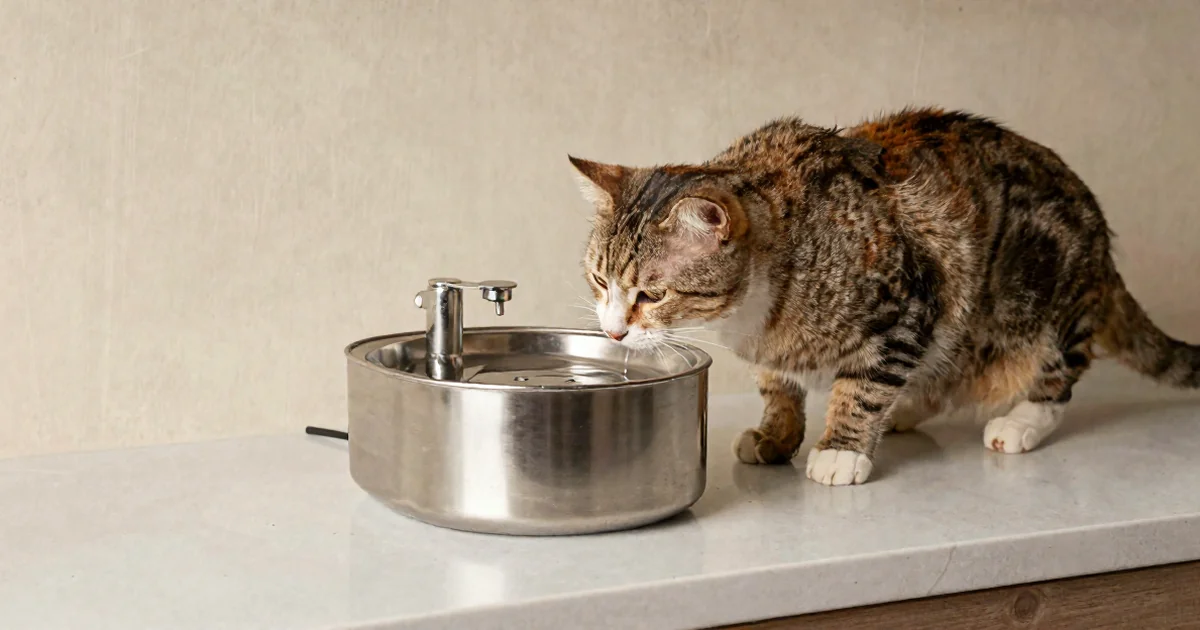
Vets consistently recommend increasing water intake. The easiest method: moving water. Cats are attracted to flowing water instinctively. A water fountain encourages drinking without forcing behavior changes.
Budget option: Stouchi Stainless Steel Pet Water Fountain
This holds 85oz (2.5L) with food-grade stainless steel top and BPA-free eco-friendly base. The 7-stage filtration removes debris and odors. Silent pump means it won't wake you at night.
Price: $30-40. Replace filters every 4-6 weeks (roughly $2-3 per filter).
Why this works: Stainless steel lasts longer than plastic fountains. Plastic develops scratches where bacteria hides, requiring earlier replacement. One stainless fountain can last 5+ years. That's cheaper long-term than replacing plastic models every 2-3 years.
Premium option: Veken Stainless Steel Cat Water Fountain
Larger capacity (95oz), 5-stage filtration including silver ion and scale inhibitors, LED light for visibility at night, under 40dB ultra-quiet. Dishwasher safe parts make cleaning easier.
Price: $35-45.
The difference: slightly larger capacity and more advanced filtration. If you have multiple cats or travel frequently (less refilling needed), the extra $5-10 makes sense. For one cat in a small household, the budget option works fine.
Sustainable Waste Management
Cat litter is a recurring expense that adds up. Average cat produces roughly 200 pounds of waste annually. Traditional clay litter costs $15-25 per month and sits in landfills for decades.
Biodegradable alternatives cost roughly the same per bag but break down naturally. If you're spending the money anyway, switching to compostable options reduces environmental impact without budget increase.
For outdoor/catio cats: Greener Walker Biodegradable Poop Bags
540-count bulk pack, extra-thick, 100% leak-proof. Made from corn starch, not petroleum plastic. Includes dispenser for easy storage.
Price: $18-25 for 540 bags. That's roughly $0.03-0.05 per bag.
Compare to regular plastic bags at $0.02-0.04 per bag. The cost difference is minimal (roughly $3-6 per year), but biodegradable bags break down in 90-180 days instead of 500+ years.
For composting: My AlphaPet Compostable Poop Bags
120-count, certified home compostable (NF T 51-800), cornstarch-based, 9x13 inch large size. These meet ASTM composting standards.
Price: $12-18 for 120 bags.
Important: These are compostable, not just biodegradable. If you're building home compost, bury bags in the center (not surface) for faster breakdown. Never compost in gardens where you grow food.
Organizing Supplies Sustainably
Cat ownership accumulates stuff: toys, treats, grooming tools, medications, extra litter, waste bags. Most people store these in plastic bins under sinks or in closets.
Natural storage alternatives last longer and look better. Deosur 4-Pack Bamboo Storage Baskets hold cat supplies in handwoven natural bamboo with removable washable cotton liners.
Price: $28-35 for four baskets.
Why bamboo matters: Plastic bins off-gas chemicals (that "new plastic" smell). Bamboo is naturally antimicrobial and breathes better, reducing odor buildup from stored litter or treats. It also lasts decades instead of cracking after 3-5 years like plastic.
Use one basket for toys, one for grooming supplies, one for medications/supplements, one for waste management (bags, scoopers, gloves). Stack them or line them up on shelves.
Enrichment Without Expensive Toys
Bored cats destroy furniture, overgroom, or become aggressive. Enrichment prevents this. But you don't need $50 automated laser toys or subscription toy boxes.
Effective low-cost enrichment:
- Cardboard boxes: Free. Cats obsess over boxes. Rotate them weekly to maintain novelty.
- Paper bags: Free. Crinkly texture and hiding space. Remove handles (strangulation risk).
- DIY puzzle feeders: Use toilet paper rolls or egg cartons. Hide dry treats inside. Cat works to extract food.
- Window perches: $15-25 suction cup perches. Cats watch outdoor activity for hours.
- Catnip rotation: $5-8 for dried catnip. Sprinkle on toys every 2-3 weeks. Store in sealed container between uses to maintain potency.
The pattern: novelty matters more than cost. Rotating free or cheap items weekly provides more enrichment than one expensive automated toy used daily.
When to Spend Money vs. Save
Spend money on:
- Vet care: Annual checkups, vaccines, dental cleanings. Prevention costs less than emergency treatment.
- Quality food: Cheap food with fillers causes health issues long-term. Mid-range food ($40-60/month) prevents expensive vet bills.
- Water fountain: Hydration prevents kidney disease. $30-45 fountain saves thousands in vet costs.
- Sturdy cat tree: $80-150 one-time cost. Prevents furniture damage and provides exercise.
Save money on:
- Toys: Rotate cheap/free options instead of buying premium toys.
- Litter boxes: Basic plastic boxes ($8-15) work as well as fancy covered ones.
- Bowls: Stainless steel or ceramic ($5-10) beats "designer" bowls.
- Beds: Cats often prefer cardboard boxes over $40 beds.
The Budget Breakdown
One-time purchases:
- Water fountain: $30-45
- Cat tree: $80-150
- Storage baskets: $28-35
- Total: $138-230
Monthly recurring:
- Food: $40-60
- Litter: $15-25
- Fountain filters: $2-3
- Waste bags (if needed): $2-3
- Total: $59-91/month
Annual vet care: $200-400 (healthy cat, no emergencies)
Total first year: $846-1,322 Total subsequent years: $708-1,092
Compare that to "luxury" cat wellness (premium subscription boxes, automatic feeders, designer furniture): $2,000-4,000 annually.
The difference: $1,154-2,678 per year. Over a cat's 15-year lifespan, that's $17,310-40,170 saved.
What Actually Matters
Cats need clean water, clean litter, food, vet care, and mental stimulation. Everything else is optional.
A water fountain solves a real problem (dehydration). Biodegradable waste bags solve a real problem (landfill waste). Bamboo storage solves a real problem (plastic off-gassing and clutter).
Expensive automated feeders, designer toys, and premium beds? Those solve human problems (wanting to feel like good pet parents), not cat problems.
Your cat doesn't care if their water fountain cost $35 or $350. They care that the water moves and tastes fresh.
Start with the basics that improve health. Add extras only if they solve specific problems your cat actually has.
Disclaimer: Cat health needs vary by age, breed, and medical history. Consult your veterinarian for personalized wellness recommendations. This article provides general guidance for healthy adult cats.
TopicNest
Contributing writer at TopicNest covering lifestyle and related topics. Passionate about making complex subjects accessible to everyone.