Table of Contents
Sleep Optimization: What Science Says Works in 2026
Sleep research in 2025 and 2026 has produced one consistent finding that reshapes how we think about sleep quality: consistency of timing may matter as much as - or more than - total duration. A 2025 systematic review of 59 studies found that irregular sleep timing is linked to 20 to 88% higher all-cause mortality, independent of total sleep hours. The same pattern holds for dementia risk - irregular sleep timing is associated with 26 to 53% increased dementia risk and measurably smaller hippocampal volume.
This shifts the conversation. Rather than asking only "how much sleep do you get?" the more complete question is "when do you sleep, and how consistently?"
Why Sleep Consistency Matters More Than Duration
The circadian clock operates on an approximately 24-hour cycle synchronized primarily by light. When sleep timing varies by more than 30 to 60 minutes across nights - different bedtimes on weeknights versus weekends, variable wake times - the clock receives inconsistent anchoring signals. This creates a form of chronic jet lag even without crossing time zones.
Social jet lag - the misalignment between biological timing and social scheduling - is measurably associated with higher BMI, elevated cortisol, increased inflammatory markers, and worse mood regulation. These effects occur even when total sleep hours are adequate.
Practical implication: choose a wake time and maintain it 7 days a week, even when you sleep poorly. The consistency of wake time is the most powerful lever for anchoring the circadian clock.
How the Circadian Clock Works and Why Morning Light Is the Most Powerful Lever
The suprachiasmatic nucleus (SCN) in the hypothalamus receives direct input from light-sensitive retinal cells. Bright light in the first hour after waking triggers a cortisol awakening response - not chronic stress cortisol, but the alerting pulse that sets the clock's timing for the entire day.
Outdoor morning light delivers 10,000 to 100,000 lux. Indoor artificial lighting typically provides 100 to 500 lux - insufficient to produce the same circadian signal. Spending 10 to 20 minutes outside within the first hour of waking, without sunglasses, is the single highest-impact circadian intervention for most people.
A sunrise alarm clock that simulates dawn light beginning 30 minutes before wake time can support morning cortisol signaling and make waking easier, particularly in winter months with late natural sunrise. It supplements but does not replace outdoor light exposure.
Evening Habits That Protect Melatonin
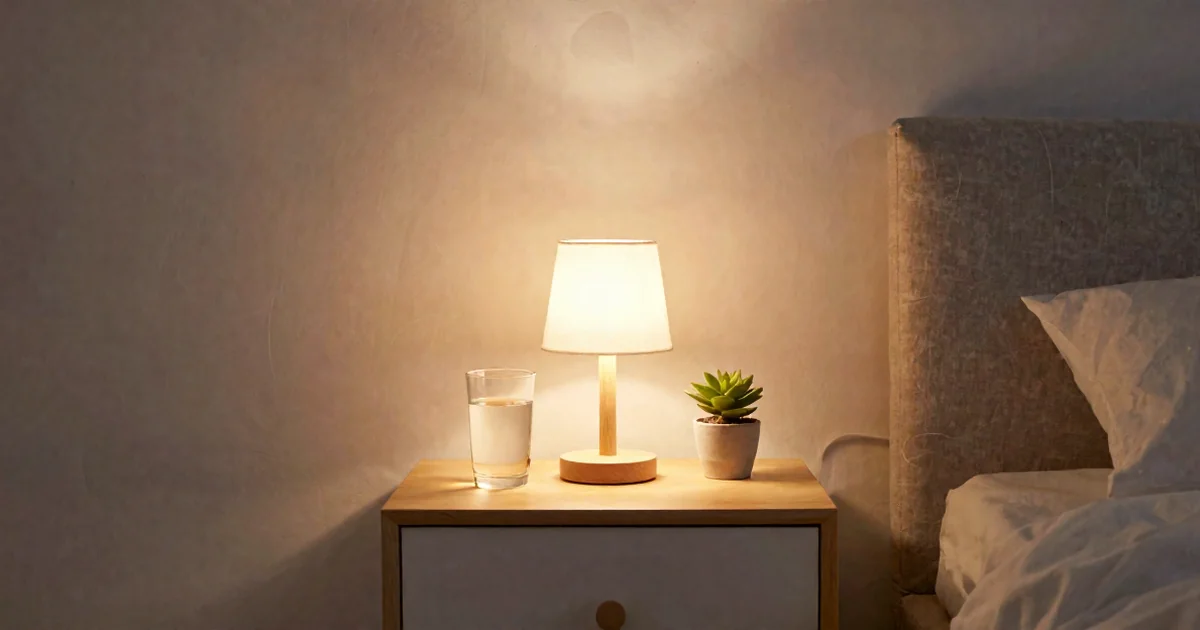
Melatonin is produced by the pineal gland in response to darkness. Blue light at 460 to 480 nm directly suppresses melatonin by up to 50%, even from low-brightness screens. Dimming all screens and lights after 8 pm is the most accessible melatonin protection strategy.
Blue-light-blocking glasses worn in the 2 to 3 hours before bed attenuate blue light exposure from screens and artificial lighting. They are more convenient than eliminating screen use but less effective than actual screen-free time.
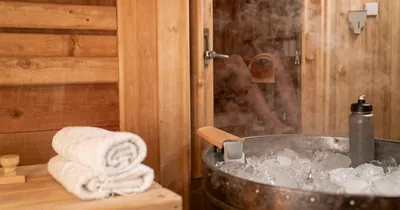
Room temperature is equally important. Core body temperature must drop 1 to 1.5 degrees Celsius to initiate sleep. Bedroom temperature of 15 to 19 degrees Celsius supports this drop. Warm baths taken 1 to 2 hours before bed paradoxically aid sleep by causing blood to rush to the surface of the skin, accelerating core cooling.
A white noise machine masks environmental sound disruptions that cause micro-awakenings - a common cause of poor sleep quality that sleep trackers often underdetect.
Supplements With Evidence: Magnesium Glycinate and Melatonin
Magnesium glycinate is among the most evidence-supported sleep supplements. A 2021 Nutrients review found associations between magnesium supplementation and improved sleep quality, reduced sleep onset time, and better sleep efficiency. Magnesium glycinate sleep complex taken 1 to 2 hours before bed at 200 to 400 mg is the most commonly used protocol.
Melatonin is widely sold in 5 to 10 mg doses, but this is considerably higher than what research shows is effective for most uses. Low-dose melatonin at 0.3 to 1 mg is often more effective than higher doses, and prolonged use of high doses may desensitize melatonin receptors. Melatonin is most useful for circadian timing adjustments - jet lag, shift work, advancing bedtime - rather than as a primary insomnia treatment.
Glycine (3 g before bed) showed reduced sleep onset and improved daytime alertness in a small but well-designed clinical trial. It is generally safe and inexpensive.
L-theanine (100 to 200 mg) has some evidence for reducing sleep onset anxiety without causing sedation. It is often combined with magnesium.
Sleep Gadgets Worth Buying vs. Habits That Cost Nothing
Worth buying: Blackout curtains or a sleep mask (darkness protection is among the highest-impact environmental changes), a white noise machine for noisy environments, a sunrise alarm clock for morning timing, and a thermometer to monitor bedroom temperature.
Habits that cost nothing: Consistent wake time daily, morning outdoor light exposure, no screens in the hour before bed, no caffeine after 2 pm, keeping the bedroom cool. These behavioral patterns have stronger and more consistent evidence than most sleep gadgets and supplements.
The evidence points toward an important principle: sleep is primarily a biological function that responds to environmental and behavioral cues. Optimizing those cues - light, temperature, timing, and pre-sleep arousal - produces more reliable results than stacking supplements or technology.
Lifestyle advice should be adapted to individual circumstances and values.
TopicNest
Contributing writer at TopicNest covering lifestyle and related topics. Passionate about making complex subjects accessible to everyone.