Table of Contents
A growing number of people are putting down their smartphones - and picking up something simpler. The dumb phone movement, once a fringe experiment, has quietly become one of the most practical lifestyle shifts of the decade. It is not about rejecting technology entirely. It is about reclaiming the hours, attention, and mental space that constant connectivity drains away.
The numbers tell a clear story. According to recent surveys, 45% of Gen Z and 39% of Millennials report actively trying to reduce their screen time. Many are going further than app timers and notification settings - they are switching to basic phones, minimalist devices, or hybrid setups that put them back in control.
Why People Are Downgrading
The average smartphone user checks their device over 150 times per day. Social media, push notifications, infinite scroll - these features are designed to capture attention, not respect it. For many, the result is a constant background hum of distraction that chips away at focus, sleep quality, and even relationships.
Downgrading is not about willpower. It is about removing the environment that makes distraction the default. When your phone can only call, text, and maybe play a podcast, the temptation to mindlessly scroll simply disappears. Users who have made the switch consistently report 30-50% reductions in total screen time - without relying on discipline alone.
The mental health angle matters too. Research continues to link heavy smartphone use with increased anxiety, fragmented attention, and poor sleep. A simpler phone does not fix everything, but it removes one of the biggest sources of digital noise from daily life.
The Hardware: From Budget Flips to Premium Minimalism
The market for minimalist phones has matured significantly. There are now genuine options at every price point.
The Light Phone III (~$599-799) is the flagship of the movement. It offers a clean e-ink display, essential tools like maps and music, and deliberately excludes social media, web browsing, and app stores. It is designed for people who want a phone that does less - on purpose. The build quality and design signal that choosing simplicity is not about going cheap.
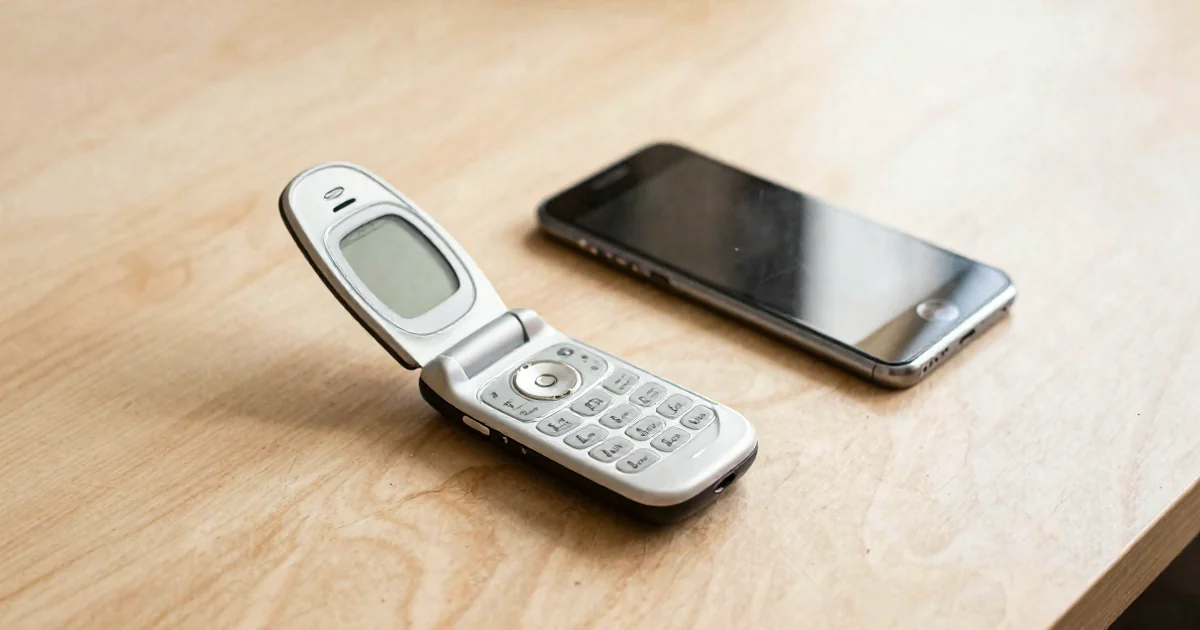
At the other end of the spectrum, the Nokia 2780 Flip (~$90) proves you do not need to spend much to experiment. It handles calls, texts, and basic navigation. The flip form factor adds a satisfying physical action to ending calls and puts a real barrier between you and idle browsing. For anyone curious about the dumb phone concept, this is a low-risk starting point.
For those who are not ready to fully commit, the Habit Control Phone Lock Box with Timer (~$25-35) offers a compromise. Lock your smartphone away for set periods - during meals, work blocks, or sleep - and use a basic phone or nothing at all during those windows. It sounds simple, but users report it is surprisingly effective at breaking the reflexive reach for their phone.
The Soft Approach: Downgrading Without Switching Devices
Not everyone needs - or wants - a separate device. Several software-based strategies can replicate much of the dumb phone experience on your existing smartphone.
Grayscale mode is one of the most underrated tools available. Switching your display to black and white removes the color cues that make apps visually stimulating. Social media feeds, games, and shopping apps become noticeably less engaging. Most phones bury this setting in accessibility options, but it takes under a minute to enable.
Minimalist launchers strip your home screen down to a simple text-based list of essential apps. Options like Olauncher or Before Launcher remove widgets, icons, and visual clutter. The phone still has all its capabilities, but the interface no longer invites casual browsing.
Dual-phone setups are increasingly popular among remote workers and freelancers. The idea is straightforward - carry a basic phone for calls and texts during personal time, and keep the smartphone for work hours or specific tasks. This physical separation creates clear boundaries that software restrictions alone struggle to enforce.
What Changes When You Actually Do It
People who downgrade their phones tend to notice changes in a predictable order. The first week often feels uncomfortable - a phantom buzz, reaching for a device that is not there, moments of boredom that used to be filled by scrolling. This discomfort is temporary and, according to most accounts, fades within two to three weeks.
What replaces it is harder to quantify but consistently reported. More present conversations. Longer stretches of focused work. Better sleep from not scrolling before bed. A surprising amount of free time that was previously invisible because it was consumed in two-minute increments throughout the day.
The 30-50% screen time reduction that studies and user reports suggest is significant. For someone averaging seven hours of daily screen time, that could mean reclaiming two to three hours every day. Over a year, that adds up to over 700 hours - time redirected toward hobbies, exercise, reading, or simply being less mentally exhausted.
Making It Stick: Practical Tips
Start with a weekend experiment. Leave your smartphone at home and carry only a basic phone for 48 hours. Note what you actually miss versus what you reflexively reach for.
If a full switch feels too extreme, try the grayscale-plus-launcher combination for two weeks. It costs nothing and is fully reversible. Many people find this middle ground gives them 80% of the benefits without any hardware investment.
Tell the people who matter. Let close contacts know you may be slower to respond to non-urgent messages. Most people are far more understanding about this than you might expect.
Keep a smartphone accessible but inconvenient. A drawer, a different room, the phone lock box - physical distance is more effective than digital willpower tools.
The dumb phone movement is not really about phones at all. It is about choosing where your attention goes, rather than letting algorithms decide for you. Whether that means a $90 flip phone, a $700 minimalist device, or simply turning your screen to grayscale - the principle is the same. Less noise, more presence, and a daily life that feels a little more intentional.
Lifestyle advice should be adapted to individual circumstances and values. Product prices are approximate and may vary.
TopicNest
Contributing writer at TopicNest covering lifestyle and related topics. Passionate about making complex subjects accessible to everyone.