Table of Contents
The bathroom is one of the most waste-heavy rooms in any home. Between disposable razors, plastic shampoo bottles, cotton rounds, and single-use packaging, the average person generates roughly 3-5 kg of bathroom waste per month. The zero-waste movement targets this room specifically because the swaps tend to be straightforward and often save money over time.
The key is focusing on swaps that actually perform. A sustainable product that does not work just gets thrown away, creating more waste than the original. Every recommendation here has been vetted through community feedback and practical testing.
1. Safety Razor
Replaces: Disposable razors and cartridge systems
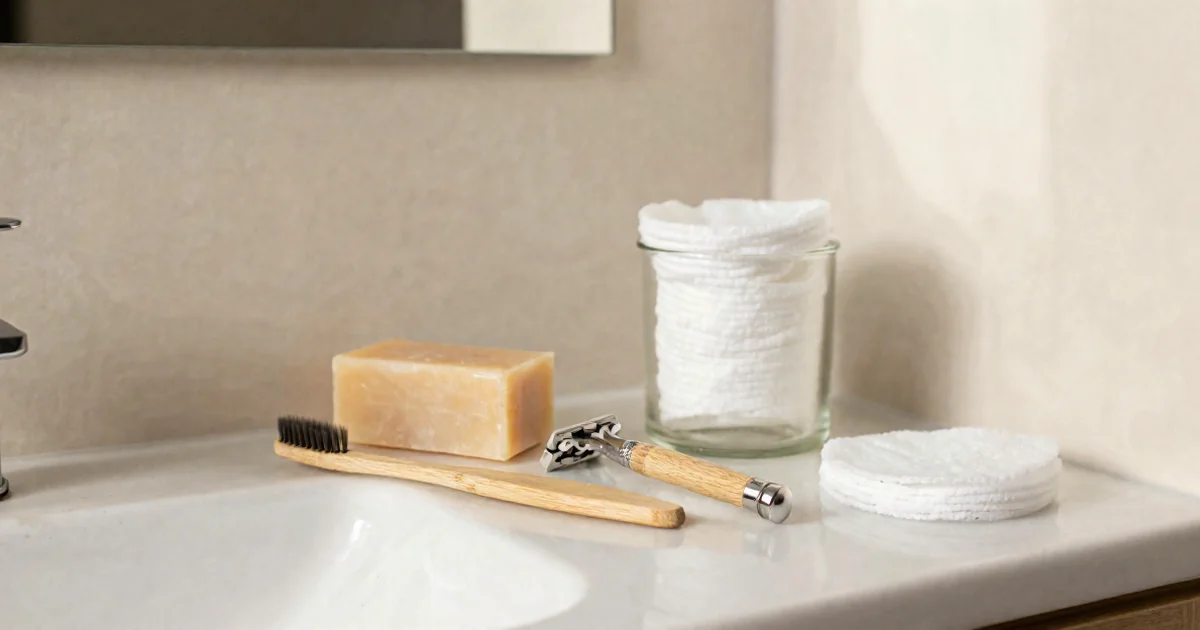
A stainless steel safety razor costs more upfront (around $30-50) but uses individual blades that cost $0.10-0.30 each versus $3-5 per cartridge. Over a year, the savings are significant - typically $50-100 annually.
The Viking Revolution Safety Razor Shaving Kit (around $50) includes the razor, stand, blades, brush, and shaving soap - everything needed to get started. The learning curve takes 3-5 shaves, after which most people find the shave quality equal to or better than cartridge systems.
The blades are fully recyclable metal. Collect used blades in a small metal tin and recycle them with scrap metal.
2. Shampoo and Conditioner Bars
Replaces: Plastic shampoo and conditioner bottles
Solid bars eliminate plastic bottles entirely and typically last as long as 2-3 bottles of liquid product. Ethique Shampoo Bar (around $12) is one of the most popular options, with formulations for different hair types.
The adjustment period matters. If you have hard water, bars may leave residue initially. An apple cider vinegar rinse once per week during the transition period helps. Most people adjust within 2-3 weeks.
Not every bar works for every hair type. If the first one does not suit you, try a different formulation rather than giving up on bars entirely.
3. Reusable Makeup Pads
Replaces: Disposable cotton rounds
A single set of reusable pads replaces roughly 1,000 disposable cotton rounds per year. LastRound Reusable Makeup Pads 7-pack (around $15-20) are made from plant-based materials and can be washed up to 1,750 times.
Wash them in a mesh laundry bag with your regular laundry. The texture feels slightly different from cotton initially, but the cleaning performance is equivalent for makeup removal and toner application.
4. Bamboo Toothbrush
Replaces: Plastic toothbrushes
The American Dental Association recommends replacing your toothbrush every 3 months. That is 4 plastic toothbrushes per year per person - brushes that take centuries to decompose. Bamboo alternatives with nylon bristles function identically and cost roughly the same ($2-4 per brush in multipacks).
The bamboo handle composts within 4-6 months. The nylon bristles still need to be removed and disposed of separately, but this reduces the plastic waste by roughly 95% per brush.
5. Refillable Soap Dispensers
Replaces: Pump bottles of hand soap and body wash
Buy concentrated soap in bulk and dilute it in a refillable glass or stainless steel dispenser. A 1-liter bottle of concentrated castile soap (around $12-16) makes roughly 10-15 refills of a standard dispenser.
Dr. Bronner's remains the most popular concentrated soap, but any concentrated castile soap works. The per-use cost drops to roughly 10-20% of pre-packaged pump bottles.
6. Menstrual Cup or Period Underwear
Replaces: Disposable pads and tampons
A menstrual cup (around $20-35) lasts 5-10 years, replacing approximately 2,400 disposable products over its lifetime. Period underwear ($15-30 per pair) works for lighter days or as backup.
These swaps have the highest initial adjustment period on this list. Most cup users report 2-3 cycles before they feel fully comfortable with insertion and removal. Community forums like r/menstrualcups offer practical guidance during the learning phase.
7. Tooth Tablets or Powder
Replaces: Toothpaste tubes
Toothpaste tubes are notoriously difficult to recycle due to their mixed materials. Tooth tablets (chewable solid toothpaste) come in glass jars or compostable packaging. Bite and DentTabs are popular brands at around $8-12 for a 2-month supply.
One important note: many tooth tablets do not contain fluoride. If cavity prevention is a concern (and for most people it should be), choose a fluoride-containing option or supplement with a fluoride mouthwash.
8. Bar Soap Instead of Body Wash
Replaces: Plastic body wash bottles
This is the simplest swap on the list. Bar soap produces no plastic waste, lasts longer per use than body wash, and costs less. A $3-5 bar of soap lasts as long as a $6-8 bottle of body wash.
Choose bars with minimal packaging - many natural soap brands wrap in paper rather than plastic. Fragrance-free options work well for sensitive skin.
9. Compostable Dental Floss
Replaces: Conventional nylon dental floss in plastic containers
Standard dental floss is nylon in a plastic dispenser - small but persistent waste. Silk or corn-based compostable floss in refillable glass containers eliminates both the plastic container and the non-biodegradable string.
Brands like Dental Lace (around $10 for starter kit with refills) offer this format. The floss performs comparably to conventional options, though some people find natural fibers slightly thicker.
10. Stainless Steel or Silicone Ear Cleaning Tools
Replaces: Cotton swabs (Q-tips)
Cotton swabs are among the most common items found in ocean pollution surveys. A reusable stainless steel ear cleaning tool or silicone-tipped swab costs $5-10 and lasts indefinitely.
Note that most ear, nose, and throat specialists advise against inserting anything into the ear canal regardless of the material. These tools work well for other personal care uses that cotton swabs serve - applying ointments, cleaning jewelry, and detail cleaning.
Tracking Your Progress
You do not need to make all ten swaps at once. Replace items as they run out - when your razor cartridges are done, switch to a safety razor. When your shampoo bottle empties, try a bar.
Most people who approach zero-waste gradually find that 5-7 swaps cover 80% of their bathroom waste. The remaining 20% often involves specialty products where sustainable alternatives are harder to find or significantly less effective. That is a reasonable place to accept imperfection.
A realistic goal is not zero waste - it is significantly less waste, sustained over time.
Lifestyle advice should be adapted to individual circumstances and values.
Explore more practical lifestyle tips at TopicNest Lifestyle.
TopicNest
Contributing writer at TopicNest covering lifestyle and related topics. Passionate about making complex subjects accessible to everyone.