Table of Contents
The Budget Airline Business Model
Budget carriers profit from unbundling services. The base fare covers only your seat. Everything else - bags, seat selection, priority boarding - costs extra.
This works well for light travelers who need just a seat and small bag. It becomes expensive when you add multiple extras.
The business model relies on attracting customers with low advertised fares, then generating profit through ancillary fees. The €19.99 flight price gets you in the door. The €60 in extras you add makes the airline profitable.
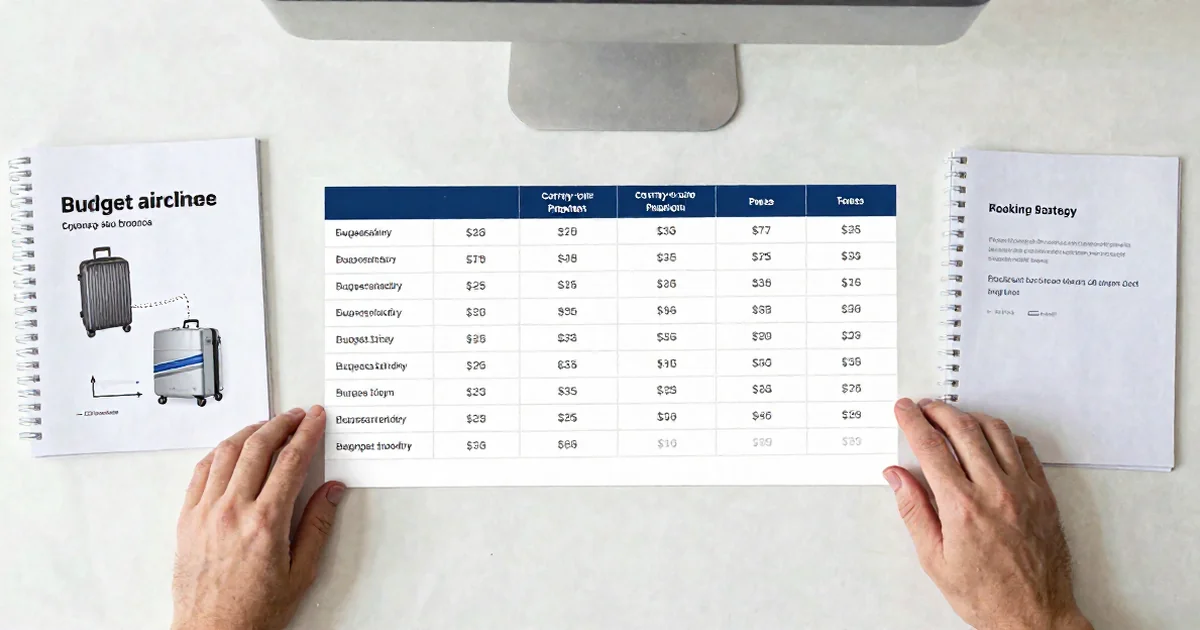
Full-service airlines bundle these costs into higher base fares. Their €80 ticket includes checked bags and seat selection that budget carriers charge €30+ extra for. Understanding this difference helps you compare apples to apples.
Baggage Allowances Explained
All budget airlines include one personal item (40x25x20cm). This fits under the seat - a small backpack or handbag.
Cabin bags (55x40x20cm) cost €10-30 depending on route and when booked. Book during initial reservation for lowest rates. Airport prices are 2-3x higher.
Checked bags start at €15-25 for 10kg, €25-40 for 20kg when booked in advance. Wait until the airport and pay €40-70 for the same bag.
The dimensions matter more than airlines admit. Bag sizers at gates are strict. A bag measuring 56x41x21cm won't fit in the 55x40x20cm sizer even though it's only 1cm over each dimension. They'll make you check it at gate prices.
Weight limits on cabin bags vary by airline. Ryanair enforces 10kg strictly. EasyJet allows up to the specified dimensions regardless of weight. Wizz Air checks both size and weight.
Packing Strategies to Avoid Fees
Maximize your free personal item. Use a small backpack at maximum allowed dimensions packed efficiently.
Wear bulky items (coats, boots) and pack lightweight clothes. Compression bags reduce volume significantly.
Distribute weight between personal item and cabin bag if buying cabin baggage. The combined limit matters more than individual bag weight.
Wearing your heaviest shoes, jeans, and jacket while carrying books in coat pockets keeps weight out of your bags. It looks ridiculous but saves money.
Stuff socks and underwear into shoes. Roll clothes instead of folding. Use every cubic centimeter efficiently. Packing cubes help organize and compress contents.
Priority Boarding Value Assessment
Priority boarding costs €6-12 and guarantees overhead bin space plus faster boarding. It includes cabin bag allowance on some airlines.
This provides value on full flights where regular passengers may be forced to gate-check bags. Less useful on half-empty flights.
Peak travel times (Friday evenings, Sunday evenings, summer weekends) almost guarantee full flights. Priority boarding ensures you board early enough to find overhead space.
Off-peak flights (Tuesday mornings, Wednesday afternoons, winter weekdays) rarely fill up. Save the priority boarding fee when flights are 60-70% full.
Seat Selection Worth Paying For
Random seat assignment is free but you'll sit separately from companions. Paying €5-15 guarantees sitting together.
Extra legroom seats (€15-30) provide 5-8cm more space. This matters on flights over 2 hours or for taller passengers.
Avoid paying for regular seat selection on short flights. Random assignment usually works fine for solo travelers.
Families with young children often get reseated together at the gate for safety reasons. Paying for seat selection might be unnecessary, though it's not guaranteed.
Exit row seats offer the most legroom but come with responsibility requirements. You must be able-bodied and willing to assist in emergencies. These usually cost €20-35.
Flight Change and Cancellation Policies
Flight changes cost €35-60 plus any fare difference. Changes within 7 days of departure often cost more.
Most budget airlines don't offer refunds. You can change to a different flight but lose the money if you cancel.
Flex fares cost 30-50% more but allow free changes and sometimes refunds. Only worthwhile if your plans are uncertain.
The change fee often exceeds the original ticket price. A €29.99 flight with €45 change fee plus €30 fare difference means paying €75 to change a €30 ticket. Sometimes booking a new flight costs less.
Name changes are usually impossible or extremely expensive (€110-160). Budget airlines treat each booking as final. Spelling errors caught immediately might be correctable; otherwise you're buying a new ticket.
Hidden Fees to Watch For
Payment fees of €2-8 apply to credit cards. Only specific debit cards are fee-free. Check which cards avoid fees before booking.
Airport check-in costs €30-55 if you don't check in online. Always check in online and download boarding passes beforehand.
Printing boarding passes at the airport costs €15-20 at some airlines. Save them to your phone or print at home.
Carry-on bag measurement at the gate sometimes targets passengers randomly. Having a slightly oversized bag might cost you €50-70 in forced checked bag fees.
When Budget Airlines Cost More Than Full-Service
Business travelers needing flexibility, checked bags, and seat selection often pay more than full-service airline economy fares.
Compare total costs including extras before booking. A €40 budget fare plus €60 in extras costs more than an €80 full-service ticket.
Business travelers requiring certainty should compare the full-service ticket with change flexibility against the budget airline flex fare plus extras. The full-service option often costs less and provides better service.
Three or four travelers each paying for checked bags, seat selection, and priority boarding can easily match or exceed full-service airline group booking prices.
Route Network Considerations
Budget airlines serve secondary airports 50-100km from city centers. Factor in transfer time and cost to your destination.
Flying to Beauvais (for Paris) or Bergamo (for Milan) adds 60-90 minutes and €15-30 in bus transfers compared to main airports.
Beauvais is 85km from Paris with buses costing €17 each way and taking 75 minutes. That €29 flight becomes a €63 expense with 2.5 hours of bus time. The main airport flight at €65 starts looking reasonable.
Similarly, flying to Girona for Barcelona, Hahn for Frankfurt, or Weeze for Düsseldorf adds significant time and transfer costs that erode the budget fare savings.
Booking Timing Strategy
Budget airlines release seats 9-12 months ahead with initially low prices that rise as departure approaches.
Flash sales offer steep discounts on specific routes and dates. These last 24-48 hours and sell out quickly.
Last-minute deals exist but are unreliable. Flights might be €200 one week before departure or might be €30 if the airline wants to fill seats.
The lowest prices typically appear 6-8 weeks before departure when the airline has decent booking data but hasn't entered final pricing phase. Too early and you pay slightly more; too late and prices spike.
Making Budget Airlines Work
Travel light with just personal item to avoid all baggage fees. Possible for 2-3 day trips with efficient packing.
Book extras during initial purchase rather than adding later. Prices increase significantly for post-booking additions.
Join airline loyalty programs for occasional discounts and fare sales access. The programs are free and sometimes provide useful perks.
Check alternative routes and dates. Flying Monday instead of Friday can save €40-80 on the same route.
TopicNest
Contributing writer at TopicNest covering travel and related topics. Passionate about making complex subjects accessible to everyone.