Table of Contents
EU Flight Delay Compensation in 2026: Know Your Rights
Millions of passengers are entitled to flight delay compensation each year and do not claim it. EU Regulation 261/2004 has been in force since 2005, but airlines do not make the claims process easy. Knowing the rules before a disruption happens means you are not relying on airline staff to explain your rights at a busy gate.
If you book flights through aviasales or any other search tool, the underlying regulation applies the same way regardless of where you purchased the ticket.
What EU Regulation 261/2004 Covers
The regulation applies to flights departing from any EU airport, and to flights arriving at an EU airport operated by an EU-based carrier. This covers UK flights departing from the UK under retained UK261 rules (broadly equivalent as of 2026).
Compensation applies when a flight arrives at the final destination three or more hours later than the scheduled arrival time, when a flight is cancelled with less than 14 days' notice, and in some boarding denial situations.
The regulation covers delays, not punctuality. A flight that departs six hours late but lands only two hours and fifty minutes after the scheduled arrival time does not qualify under the three-hour arrival threshold.
Compensation Amounts by Distance
| Route distance | Compensation |
|---|---|
| Under 1,500 km | 250 euros |
| 1,500-3,500 km | 400 euros |
| Over 3,500 km (non-EU) | 600 euros |
For flights longer than 3,500 km where the delay is between three and four hours at arrival, the compensation can be reduced by 50% to 300 euros. The airline makes this calculation - not the passenger.
These amounts apply per passenger. A family of four delayed on a 2,500 km route is entitled to 1,600 euros in total.
What Counts as an Extraordinary Circumstance
Airlines can avoid paying compensation when a delay results from an extraordinary circumstance they could not have avoided even with all reasonable measures. The definition matters because airlines frequently apply it incorrectly.
Circumstances that do qualify as extraordinary include severe weather that makes flying unsafe, air traffic control strikes, and genuine security threats. These represent events outside the airline's control.
Circumstances that do NOT qualify include mechanical problems or technical failures. EU courts have consistently ruled that aircraft maintenance is within the airline's control and cannot be used to avoid compensation. Internal airline strikes also do not qualify as extraordinary circumstances - only third-party strikes (such as air traffic control) do.
Airlines cite extraordinary circumstances in a significant share of compensation refusals. Many of those refusals are incorrect and would not survive challenge.
Rights During the Delay Itself
Separate from compensation, the regulation creates immediate care obligations when delays exceed certain thresholds.
For delays of two or more hours, the airline must provide free meals and refreshments proportional to the waiting time, and two free phone calls or emails. For delays of five or more hours, passengers have the right to a full refund of the ticket price if they choose not to travel. For overnight delays, the airline must provide hotel accommodation and transport between the airport and the hotel.
If the airline does not offer these, document your expenses. Reasonable costs for meals, transport, and accommodation during the disruption period are generally recoverable - keep receipts.
How to Document a Delay
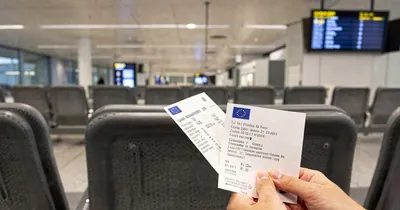
Documentation before, during, and after the delay improves the chances of a successful claim. Take a photo of the departures board showing the delay. Note the scheduled and actual departure and arrival times. Keep your boarding pass. If the airline communicates a reason for the delay, note it or photograph any written notices.
Airlines are required to inform passengers of their rights when a delay or cancellation occurs. If they do not, that does not affect your entitlement, but it does mean you need to know the rules yourself.
Claiming Yourself vs Using a Service
Claims can be submitted directly to the airline using their online claims form. Airlines must respond within 14 days and pay within 14 days of accepting the claim. Many airlines accept valid claims promptly when documentation is clear.
When airlines reject claims incorrectly, or simply do not respond, using a claims service is a practical option. Services like compensair and airhelp operate on a no-win-no-fee basis, taking a percentage (typically 25 to 35%) of the compensation if successful and nothing if the claim fails. For passengers who do not want to manage correspondence with an airline over several months, this tradeoff is often worthwhile.
Submitting through a service does not strengthen or weaken the legal claim. It shifts the administrative burden and shares the outcome.
The 2026 Regulatory Situation
In June 2025, the EU Council approved a draft proposal that would raise the compensation threshold from three hours to five hours for short-haul flights, and to nine hours for long-haul. This proposal was not in force as of early 2026. The existing three-hour threshold remains the current legal standard.
If the proposal becomes law, it would significantly reduce the number of qualifying delays, as industry data suggests the majority of structural delays fall in the three-to-four hour range. Passengers should monitor updates if traveling in the latter half of 2026.
A Note on Accepting Vouchers
Airlines frequently offer travel vouchers instead of cash compensation. Accepting a voucher is not legally required, and vouchers typically cannot be transferred or used flexibly. Cash compensation is the legal entitlement. If an airline offers a voucher as a settlement for a delay claim, you are entitled to decline it and request the cash amount.
Travel information changes frequently. Verify details before booking. Travel involves risk.
TopicNest
Contributing writer at TopicNest covering travel and related topics. Passionate about making complex subjects accessible to everyone.