Table of Contents
Phone Camera Capabilities
Modern phones (iPhone 13+, flagship Androids) produce excellent photos in good light. For social media and memories, phones suffice. Current phone cameras feature multiple lenses, night mode, and computational photography that rivals dedicated cameras for casual use.
Night mode and computational photography eliminate the quality gap for casual photography. Phones automatically combine multiple exposures, adjust colors, and reduce noise. Results often surpass what casual photographers achieve with cameras.
Lack of optical zoom is the main limitation. You can't capture distant subjects well. Phone digital zoom degrades quality significantly beyond 2-3x. Birds, wildlife, or distant architecture require proper cameras with telephoto lenses.
Portrait modes and wide-angle lenses on phones handle most travel scenarios. Street photography, food, landscapes, and group photos all work fine on phones. Only specialized photography truly needs dedicated equipment.
When to Bring a Dedicated Camera
Wildlife and nature photography requires zoom lenses. Phone cameras can't compete here. Photographing animals, birds, or distant landscapes needs 200mm+ focal lengths impossible on phones.
Low-light photography (concerts, nighttime cityscapes) benefits from larger sensors. While phone night modes improve constantly, dedicated cameras still perform better in very dark conditions. Museums, churches, and nighttime streets challenge phone cameras.
Print-quality photos for framing need more resolution than phones provide. Phone images work fine up to about 30x40cm prints. Larger prints or heavy cropping requires more megapixels.
Photography as a hobby or income source justifies carrying equipment. If photography motivates your travel, bring proper gear. The best camera is the one you'll actually use.
Manual control over settings matters for serious photographers. Phones offer limited manual controls. Dedicated cameras provide full control over aperture, shutter speed, and ISO.
Camera Options for Travelers
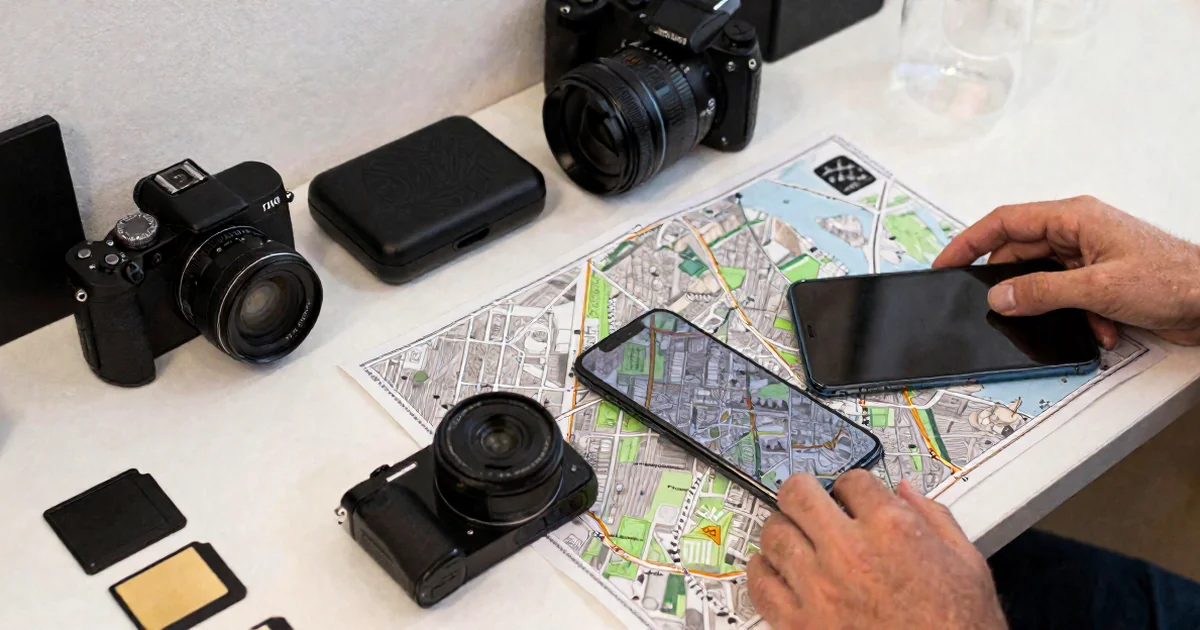
Compact cameras with 20-30x zoom fit pockets and provide better zoom than phones. Models like Sony RX100 or Canon G7X pack 1-inch sensors into compact bodies. These cost €400-800 but offer genuine quality improvements over phones.
Mirrorless cameras with one versatile lens (24-70mm or 18-135mm) cover most situations. Mirrorless systems weigh 300-500g less than DSLRs while matching quality. A body plus one zoom lens weighs under 1kg total.
Full camera kits with multiple lenses weigh too much unless photography is the trip's focus. Three lenses plus bodies weigh 3-5kg. This dominates your carry-on and limits other packing.
Consider what you'll actually photograph. Street photography needs different gear than wildlife. Landscape photography differs from portrait work. Match equipment to your actual shooting style.
Lens Selection Strategy
One zoom lens (24-70mm or equivalent) handles 90% of travel situations. This range covers wide-angle landscape shots, normal street photography, and some portrait work. Skip ultra-wide or super-telephoto unless specifically needed.
Prime lenses produce better quality but changing lenses wastes time and exposes sensors to dust. Each lens change risks getting dust on your sensor, requiring professional cleaning costing €40-60. Travel photography favors convenience over marginal quality gains.
Avoid bringing more than 2 lenses on general travel. Weight and bulk outweigh benefits. One versatile zoom beats three specialized lenses for most travelers.
Weather-sealed lenses and bodies matter if you'll shoot in rain or dusty conditions. Otherwise, standard models suffice.
Supporting Equipment
Small travel tripods enable low-light and self-portraits but add weight. Bring only if you'll use it frequently. Compact tripods weigh 800g-1.2kg. Consider whether you'll actually set it up often enough to justify carrying it.
Extra batteries matter more than extra lenses. Bring 2-3 batteries for day-long shooting. One battery might last 300-500 photos. Heavy shooting days drain multiple batteries. Spares cost €30-60 and weigh 50-80g each.
Memory cards rarely fill up with modern capacities. One 64-128GB card handles thousands of photos. A 64GB card holds 2,000-4,000 RAW images or 10,000+ JPEGs. Bring one spare card for backup, not five cards you'll never fill.
Cleaning kits (blower, microfiber cloth) maintain equipment during trips. Dust accumulates on lenses and sensors. A simple blower and cloth weigh 100g and prevent image quality degradation.
Protecting Equipment
Padded camera inserts for regular backpacks work better than dedicated camera bags that advertise expensive gear. A €30 camera insert protects your gear while looking like a normal backpack. Obvious camera bags attract thieves.
Insurance or credit card coverage for electronics provides peace of mind. Check coverage limits. Travel insurance typically covers €500-2,000 in electronics. Higher-value equipment needs additional coverage.
Don't leave cameras visible in cars or accommodation. This invites theft. Keep cameras in bags when not actively shooting. Don't place cameras on cafe tables or chair backs.
Weather protection matters. A simple rain cover costs €15-25 and protects against sudden showers. Plastic bags work in emergencies.
Backup Strategy
Upload photos to cloud storage on WiFi. This protects against lost or stolen equipment. Google Photos, iCloud, or Dropbox automatically sync photos when connected. Set uploads to WiFi-only to avoid data charges.
Secondary memory card backup exists on some cameras. Enable if available. Dual-card cameras write simultaneously to two cards. If one fails, you still have all images.
Bring a card reader to offload photos to phone or laptop for backup. USB-C or Lightning card readers cost €15-30 and weigh 20g. Transfer photos nightly to create backups.
Delete obvious mistakes during trips to free space. Don't wait until home to cull thousands of bad shots.
Realistic Usage Patterns
Most travelers take 20-50 photos daily. That's 200-500 photos per week. You're sightseeing and experiencing places, not running professional photo shoots. Pack equipment matching this reality.
You'll rarely look at 90% of photos after the trip. Quality over quantity matters more. Twenty excellent images beat two hundred mediocre snapshots.
Phone convenience means you'll actually take photos vs leaving a heavy camera in the hotel. The best camera is the one you have with you. Phones are always accessible.
Instagram and social media display at screen resolutions where phone images look identical to camera images. If sharing digitally only, phones suffice completely.
Photography vs Experience Balance
Constantly photographing everything reduces actual experience. Put the camera down sometimes. Living moments matters more than documenting every second.
The best shot isn't worth missing the moment. Take a few photos then enjoy the experience. Don't watch sunsets through your viewfinder - watch them with your eyes.
You don't need photos of everything. Remember that postcards and stock photos capture famous landmarks better than you will. Professional photographers spend hours getting those perfect shots. Your quick snapshot won't match them.
Photographing local people requires respect. Ask permission first. Some cultures consider cameras intrusive. Candid photography can offend or exploit people.
Post-Processing Considerations
RAW files require editing software and storage. JPEGs are ready to share immediately. Shooting RAW creates better quality but adds workflow complexity. Consider whether you'll actually edit images.
Editing on the road requires laptops or tablets. Most travelers don't edit until home. Phone apps handle basic adjustments for sharing during trips.
Organizing and backing up thousands of images takes hours. Factor this into your post-trip time. Many travelers return with huge photo libraries they never properly organize.
TopicNest
Contributing writer at TopicNest covering travel and related topics. Passionate about making complex subjects accessible to everyone.