Table of Contents
European Plug Types
Type C (Europlug): Two round pins, used across continental Europe.
Type F (Schuko): Two round pins with grounding clips, Germany and nearby countries.
Type G (UK): Three rectangular pins, UK and Ireland only.
Type L: Three pins in row, Italy (also accepts Type C).
Type C works in most European countries: France, Spain, Portugal, Netherlands, Belgium, Austria, Switzerland, Poland, Czech Republic, Greece, and Scandinavia.
Type F (German-style) has grounding but Type C plugs fit into Type F sockets. You can use Type C adapters throughout continental Europe.
Switzerland uses Type J (three round pins) but many sockets accept Type C. Bring both to be safe.
Universal Adapter Value
Universal adapters (€15-25) work across Europe and worldwide.
Country-specific adapters (€5-8) work cheaper if only visiting one region.
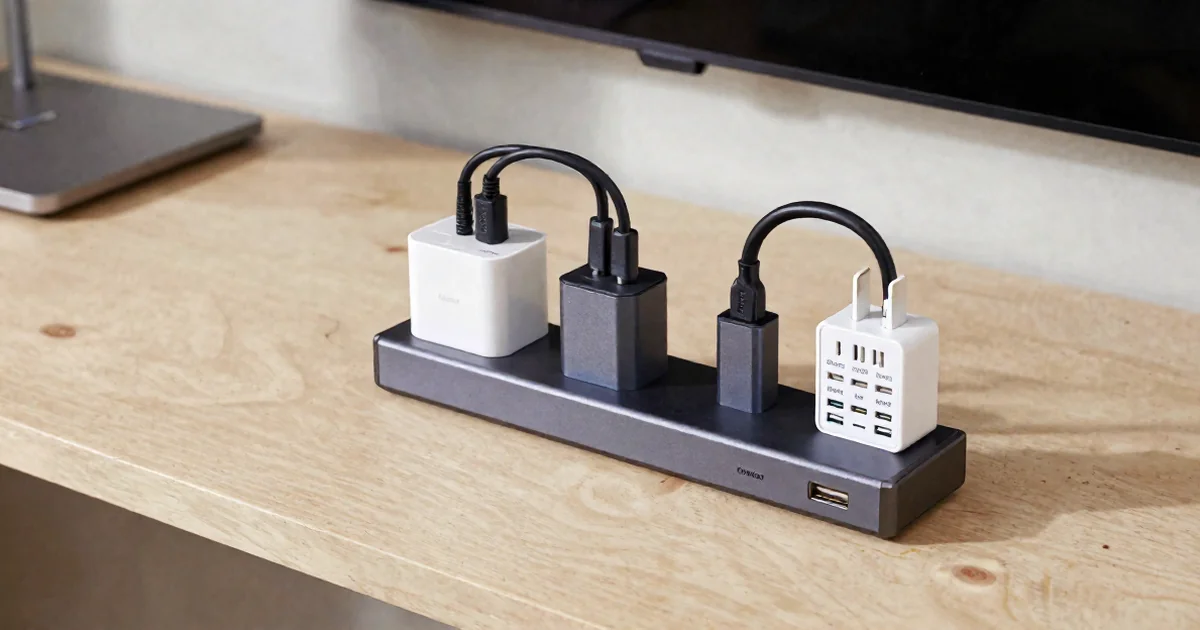
Multi-port adapters with USB charge several devices from one outlet.
Universal adapters cover US, UK, EU, and Asia plug types. Worth it for travelers visiting multiple regions regularly.
Cheap universal adapters (€8-12) have loose connections. Mid-range (€15-20) maintain better contact and last longer.
USB-integrated adapters (€20-35) eliminate need for separate USB wall chargers. Two USB ports plus one AC outlet handles phone + tablet + laptop.
Voltage Considerations
Europe uses 230V (US uses 110V).
Most modern electronics (phones, laptops, cameras) handle 110-240V automatically.
Check device labels: "INPUT: 100-240V" means it works everywhere.
Hair dryers and styling tools often only work on 110V and need voltage converters.
Chargers marked "100-240V 50/60Hz" work globally with just adapter plug, no converter needed.
Older devices or cheap chargers may be 110V only. Using these on 230V burns them out instantly. Check before plugging in.
Voltage Converters
Converters (€30-60) change 230V to 110V for incompatible devices.
They're bulky and heavy. Buy dual-voltage devices instead when possible.
Hotels sometimes have 110V outlets in bathrooms for shavers.
Converters rated for continuous use (€40-80) versus short-term use (€20-40). Hair dryers need continuous-rated converters.
Most travelers skip converters entirely and buy cheap hair dryers locally (€15-25) or use hotel-provided dryers.
What Usually Works Without Converters
Phone and laptop chargers (check label to confirm).
Camera battery chargers.
Electric toothbrush chargers.
E-reader and tablet chargers.
Apple, Samsung, Anker, and major brand chargers handle 100-240V automatically. Check the fine print on charger body.
USB power banks charge via USB cable which works universally.
What Often Needs Converters
Hair dryers (or buy cheap local ones for €15-25).
Hair straighteners and curling irons.
Electric shavers (older models).
Hot water kettles or coffee makers (travel models).
Cheap hair styling tools from drugstores are usually 110V only. Professional dual-voltage tools cost €50-150.
Most budget travelers skip bringing heat styling tools. Hotel hair dryers suffice or buy €20 local ones.
USB Charging
USB chargers work universally with adapters.
Many European hotels have USB outlets built in.
Multi-port USB chargers (€15-30) charge all devices from one adapter.
Anker, Belkin, and RAVPower make reliable multi-port chargers (€20-35) with 3-4 USB ports plus international adapters built in.
USB-C charging becoming standard. Newer devices (phones, laptops, tablets) charge via USB-C at higher wattage (30W-100W).
Power Strip Travel Hack
Bring a small power strip from home.
Plug one adapter into wall, multiple devices into power strip.
This works if your power strip doesn't have surge protection (which may not work with voltage differences).
Travel power strips (€15-25) designed for international use have built-in adapters and USB ports.
Regular home power strips work fine if devices are all dual-voltage. Single adapter plugs into wall, power strip plugs into adapter, devices plug into power strip.
Some power strips have built-in surge protection calibrated for 110V. These may malfunction on 230V. Get travel-specific models or basic strips without surge protection.
Buying Locally
Electronics stores sell adapters for €5-15 locally.
Hotels sometimes loan adapters free (ask reception).
Airport shops charge premium prices (€20-30 for basic adapters).
Europe has electronics chains: Media Markt (Germany, many countries), FNAC (France, Spain), Dixons (UK). These stock adapters at reasonable prices.
Amazon Europe delivers to hotels if staying multiple days. Order adapter, ship to hotel, pick up at reception.
Hotel Outlet Availability
European hotel rooms typically have 2-4 outlets versus 6-10 in US hotels.
Bathroom outlets often limited to shaver-specific 110V outlets (won't fit regular plugs).
Bring extension cord or power strip to maximize limited outlets.
Older hotels (pre-1990s construction) may have just 1-2 outlets per room. Budget hotels may not have bedside outlets.
Power outlets near beds vary. Many European hotels have outlets far from beds, requiring unplugging lamps to charge phones overnight.
Device Charging Strategy
Charge phones overnight, laptops during day.
Stagger charging: phone first (2 hours), then laptop (3 hours), then camera batteries.
Power banks charge devices when outlets are limited.
USB hub with 4-6 ports charges all USB devices from one outlet. Add one laptop charger plugged directly and you're set.
Wattage Considerations
High-wattage devices (hair dryers 1500-1800W, kettles 1000-1500W) may trip circuit breakers in older hotels.
Hotel circuits often rated for lower capacity than home circuits.
Avoid running hair dryer + kettle + laptop charger simultaneously.
Modern laptops charge at 45-100W. Phones charge at 5-20W. These don't overload circuits.
Hair dryers are the main problem. Hotel-provided dryers are rated for local power. Using converter with US hair dryer invites problems.
Grounding and Safety
Type C adapters don't include ground pins. Most devices don't need grounding.
Laptops and some equipment need grounded outlets (Type F, Type L).
Check device requirements before relying on basic Type C adapter.
Three-prong laptop chargers need grounded outlets. Many European outlets accommodate ungrounded plugs but some don't.
Travel Adapter Recommendations
Budget (€10-15): Basic Type C adapter for phones and tablets only.
Mid-range (€15-25): Universal adapter with 2-4 USB ports.
Premium (€30-50): Universal adapter with USB-C PD (Power Delivery), 4+ ports, built-in power bank.
Frequent travelers benefit from premium options. Occasional travelers can use budget options.
Multi-Country Trips
UK requires different adapter (Type G) than continental Europe (Type C/F).
Bringing universal adapter simplifies UK + Europe trips.
Switzerland uses Type J but many sockets accept Type C.
European trip crossing UK requires two adapter types or one universal adapter. Universal makes sense for these itineraries.
Airline Considerations
Power adapters and converters allowed in carry-on and checked bags.
Power banks must be in carry-on only (not checked).
Lithium battery limits apply to power banks (usually 100Wh limit for carry-on).
Common Mistakes
Plugging 110V-only device into 230V outlet. Device burns out instantly.
Assuming all hotel rooms have sufficient outlets. Many European rooms have minimal outlets.
Buying converter when all devices are dual-voltage. Wasted money and luggage space.
Forgetting UK uses different plugs than continental Europe. Arriving in London with only Type C adapters.
Bringing large bulky converter (1-2kg) when all devices are dual-voltage. Check before packing.
Budget Impact
Basic travel adapter: €10-15 one-time purchase used for years.
Universal adapter with USB: €20-30.
Voltage converter (if needed): €30-60.
Buying cheap local hair dryer: €15-25 versus bringing converter.
Most travelers need only adapter (€15-25), not converter. This covers phones, laptops, cameras, tablets.
TopicNest
Contributing writer at TopicNest covering travel and related topics. Passionate about making complex subjects accessible to everyone.